UNCOMMON

#274 SLP-059

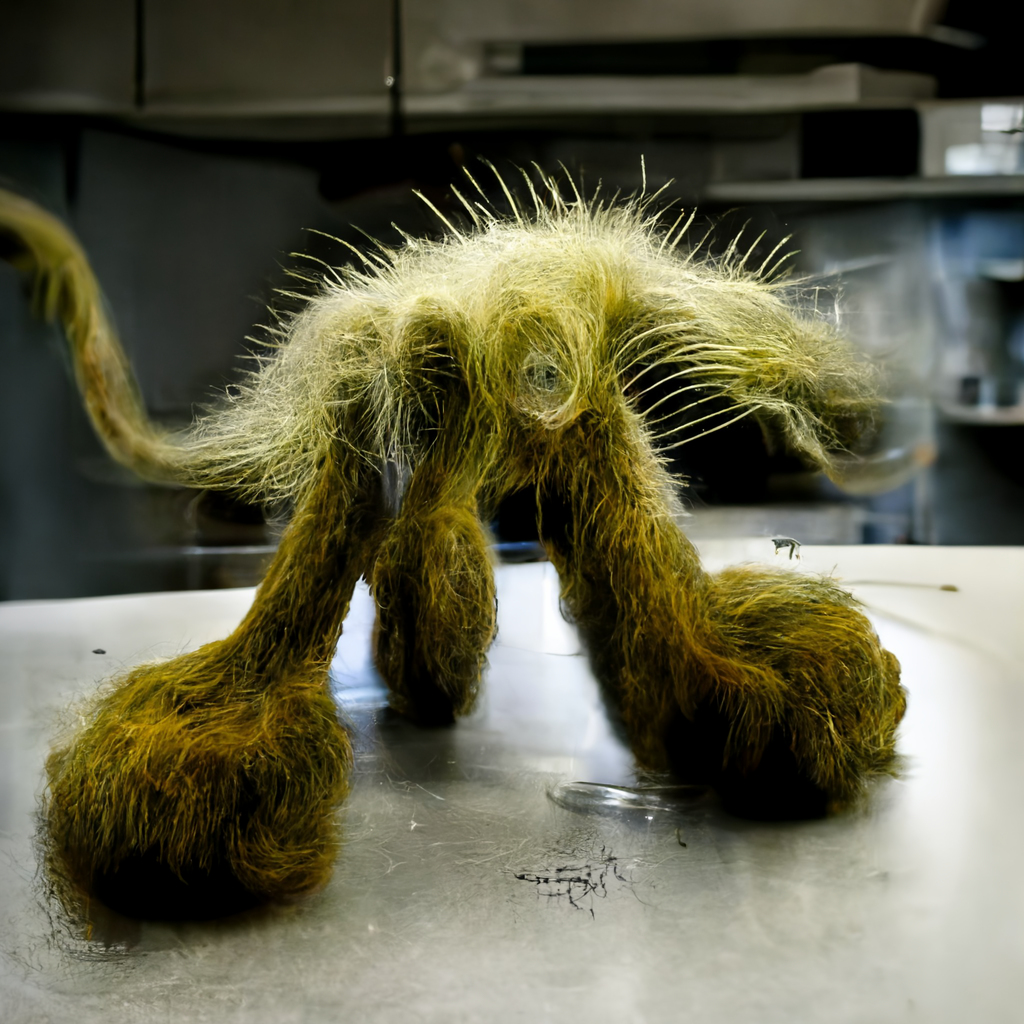
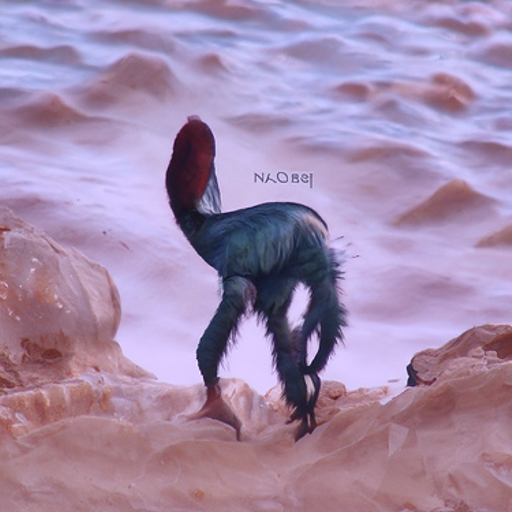
SLP-059 is a stable organic mutation of the venus fly trap, successfully designed and created at the [redacted] facility in [redacted], Virginia. SLP-059 can be recognized by its thick, mossy feet and long bristles which can extend up to six inches to capture and pull in insects and small animals. SLP-059 also contains an enzyme capable of breaking up any nonmetal material, making it technically capable of consuming almost anything. SLP-059 can go for extremely long lengths without food or water, drawing from reserved contained in its mossy stump legs. It is strongly advised to never leave SLP-059 unrestrained, or without direct human supervision.

Release Date September 27, 2022
Sign up for a free account to claim this creature as your own.

Discover other creatures

Explore an endless universe of ficticious life on NovelGens.
UNCOMMON

#026 Oroch

Orochs are more closely related to an octopus or squid than any known spider species, yet are commonly mistaken for spiders. Luckily, their bright-red color serves as a loud warning of how deadly orochs can be due to the way they hunt. Once they'v...

RARE

#107 Vlaughd

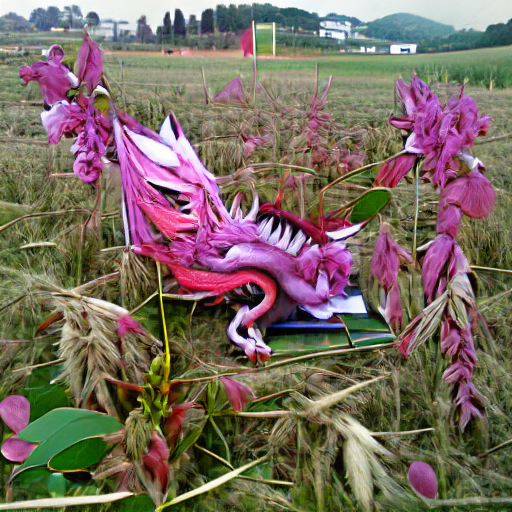
Vlaughd are demonic-looking, bat-winged desert creatures. They have extremely long prehensile tongues and their saliva is acidic enough to corrode metal. They have razor-sharp teeth and large, blood-red eyes. They are highly carnivorous and will a...

UNCOMMON

#276 Vuvegge

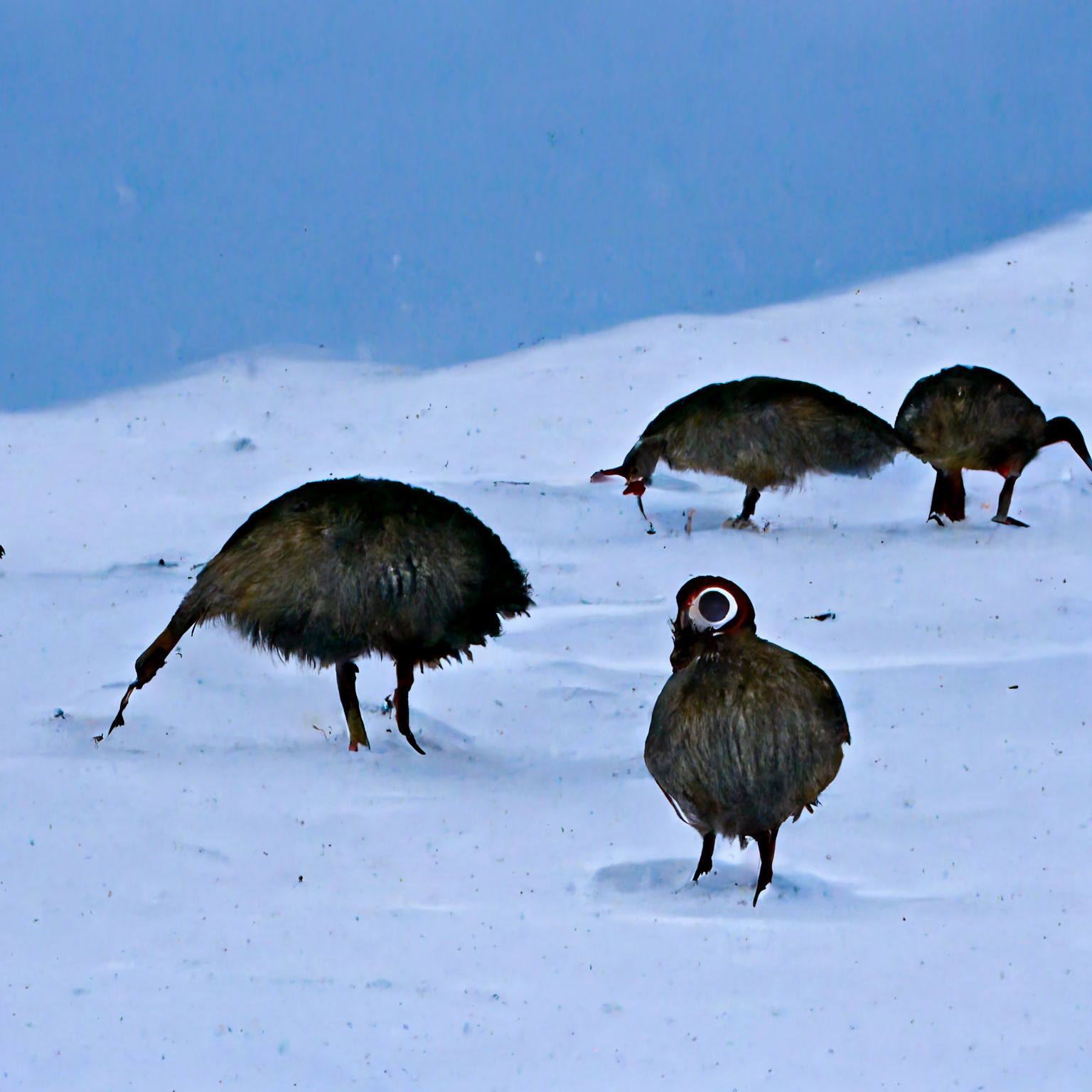
Vuvegges are small insects common to forests and jungles that don't develop a sense of sight until a late stage of life. During their early "formative" years, vuvegges use their large eyeballs as sacs to store additional food or resources. Vuve...

COMMON

#265 Trogurp

Trogurps are small, brightly-colored insects that are typically found in the forests of the world. They eat leaves and other plant matter and are covered in a thick chitinous shell. Male trogurps can be aggressive towards one another and will duel...

RARE

#286 Zuggar

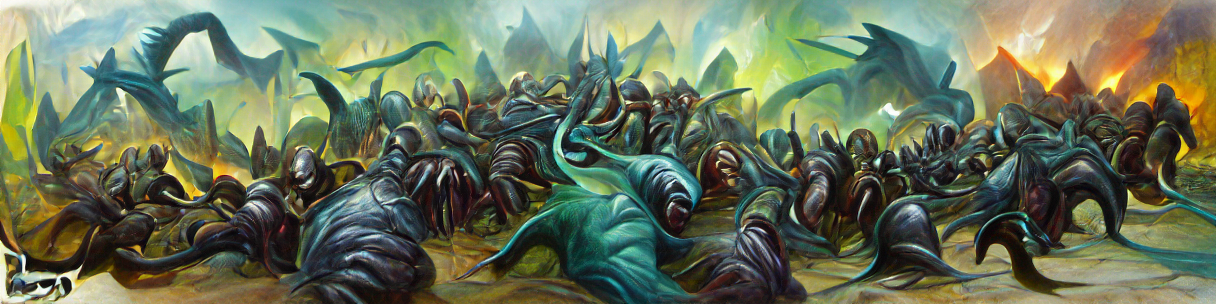
Zuggars are enormous, tentacled abominations from an unknown origin. Zuggars survive by scooping up giant mountains and slowly digesting the rock formations. After a zuggar finishes eating, it floats to the next mountain and begins the process aga...

UNIQUE

#343 Qualya

The first record of the gargantuan qualya was recorded by scientists on a digging expedition nearly a century ago, where they reported instrument malfunctions, tremors, and fits of temporary insanity. Since then, those who have studied qualya hypo...