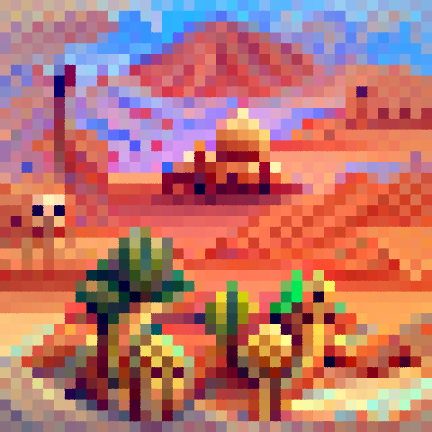
Currently...
Biome Modifiers
Acoustically sealed
Sound waves have difficulty traveling in this biome, making it extremely quiet.
Underground river
A huge underground river runs directly beneath this biome.
Poisonous
Life in this biome thrives despite rampant poison, which may be harmful to your health.
Creatures found in the Earmmyr Desert
UNCOMMON
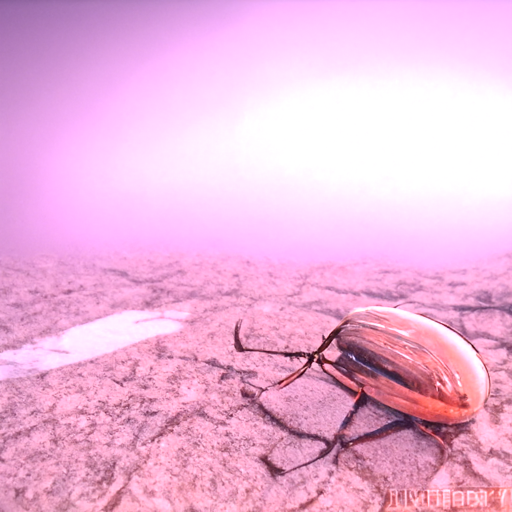
#006 Dune Beetle
Dune beetles are the speedsters of the desert. You wouldn't expect it given their colossal size, but these severely-overgrown bugs can reach speeds of over a hundred miles per hour across flat land. Their flight, however, is much slower and more controlled. It's a shame the du...
#006 Dune Beetle
RARE
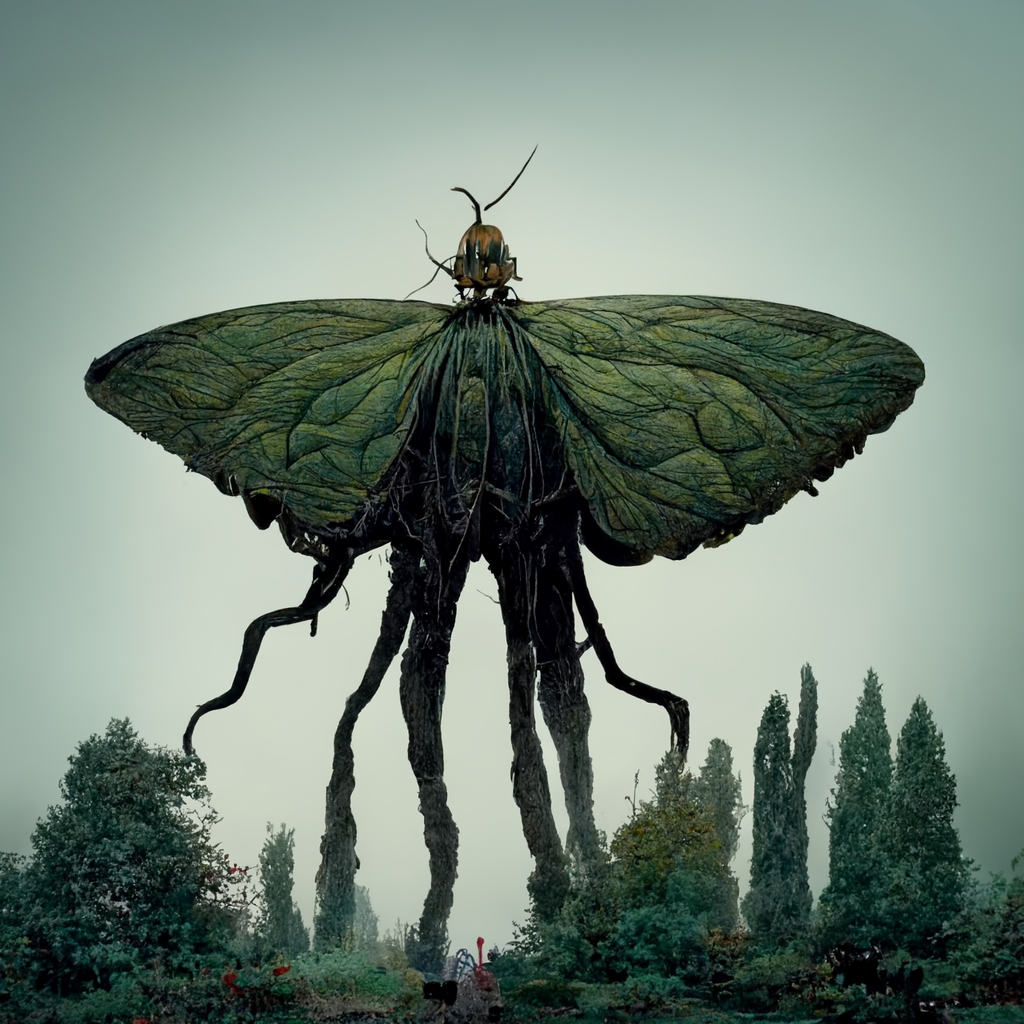
#267 Groxus
The groxus is the largest known insect in the world. They can grow to be 300 feet long and weigh up to 60 tons. Groxuses are nocturnal, feeding on large mammals and each other. They can be found in forests and deserts throughout the world. Because of their large size, groxi sp...
#267 Groxus
RARE
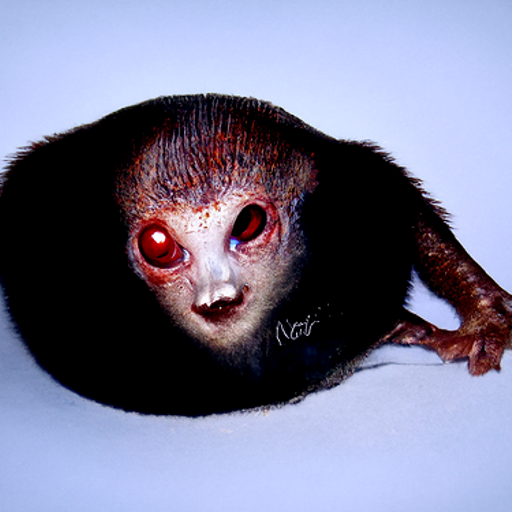
#107 Vlaughd
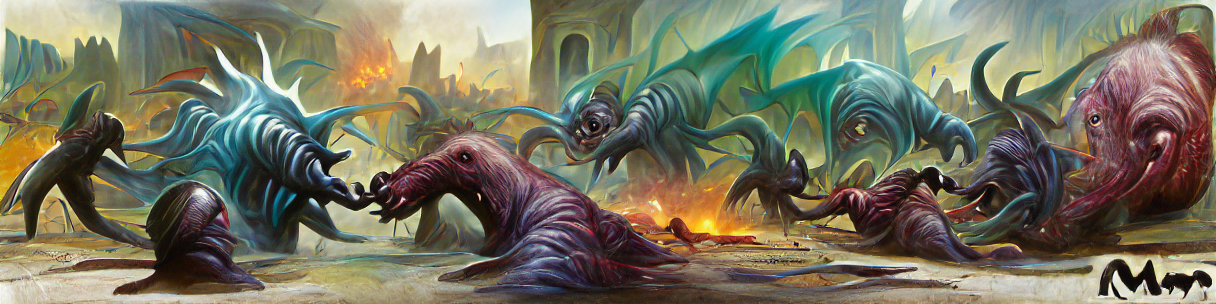
Vlaughd are demonic-looking, bat-winged desert creatures. They have extremely long prehensile tongues and their saliva is acidic enough to corrode metal. They have razor-sharp teeth and large, blood-red eyes. They are highly carnivorous and will attack and eat almost any other...
#107 Vlaughd
COMMON
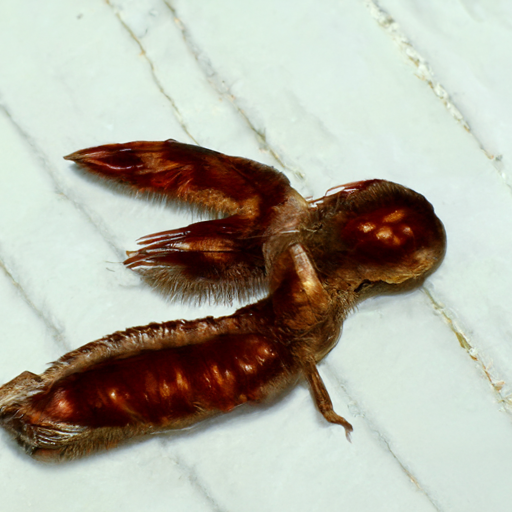
#017 Dust Angel
The dust angel is a common critter in arable desert areas. Nutrients from their saliva propagates through plants into the soil, improving yield for all plants in the vicinity. They're extremely rare and expensive, but the richest farming organizations seem to have a limitless ...
#017 Dust Angel

UNCOMMON
#187 Southern Bladesnake
The southern bladesnake is an aggressive snake variant originating in the deserts of Yerht. Most notable for their regenerative serum, bladesnakes intentionally sever the tails of their young and hold scavenged knives or other metal trinkets against the newborn's wound. Wou...