UNCOMMON

#029 Chreish

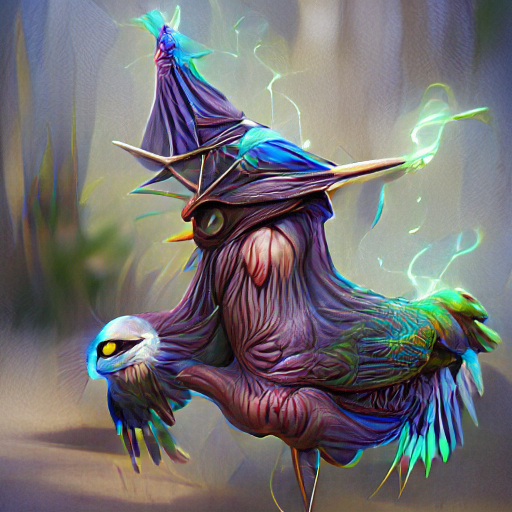
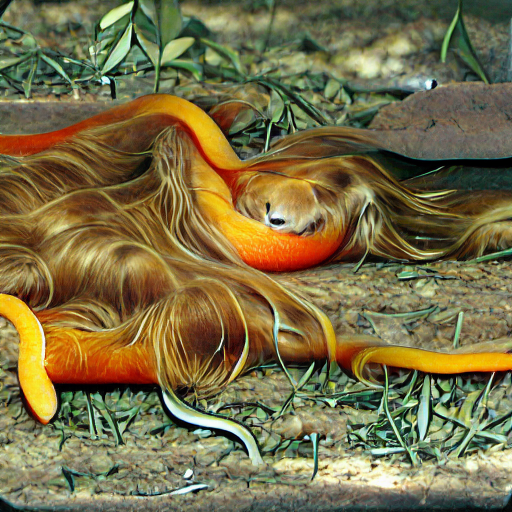
Chreish are sprawling, shapeless creatures that lack the traditional skin and body of most creatures. Instead, they grow long, entwined limbs of pure hair which act like roots to leech nutrients from the plants and soil they crawl over. They shed a lot of hair when moving and are generally seen as pests outside of the coldest climates, where their hair is a more precious resource.

Release Date January 25, 2022
Sign up for a free account to claim this creature as your own.

Discover other creatures

Explore an endless universe of ficticious life on NovelGens.

COMMON

#136 Bruvnur

Bruvnurs are large, black-and-white mammals that have demonstrated a high level of intelligence and inter-species communication. They are reknowned for their ability to quickly learn and take orders. In the wild, they are usually found in large gr...

COMMON

#126 Fexodo

Fexodos are small, furry animals that somewhat resemble a cross between a bat and a mouse. They live in herds of around fifteen and need very little food, subsisting mainly on insects and fruits. Fexodos are social and affectionate animals, and ar...

RARE

#120 Cuuyn

A cuuyn is a strange, slow-moving creature that can only survive in areas where the air contains a certain, top-secret compound. A cuuyn's lifespan is directly correlated with the density of the compound it breathes: the denser, the longer the cuu...

COMMON

#228 Agriot

Agriots are long, thin beetles with bright orange wings. They are primarily nocturnal, and spend their days sleeping in the hot desert sands; they will spend the night flying and catching insects in their long, thin pincers. Agriots tend to live b...

RARE

#286 Zuggar

Zuggars are enormous, tentacled abominations from an unknown origin. Zuggars survive by scooping up giant mountains and slowly digesting the rock formations. After a zuggar finishes eating, it floats to the next mountain and begins the process aga...

COMMON

#307 Kubup

Kubups are brightly-colored arboreal creatures that can jump up to 100 feet high. They are an important part of forest ecosystems, as they feed on dead tree leaves and recycle them into nutrients for the trees. They typically climb to the very top...