COMMON

#147 Herling

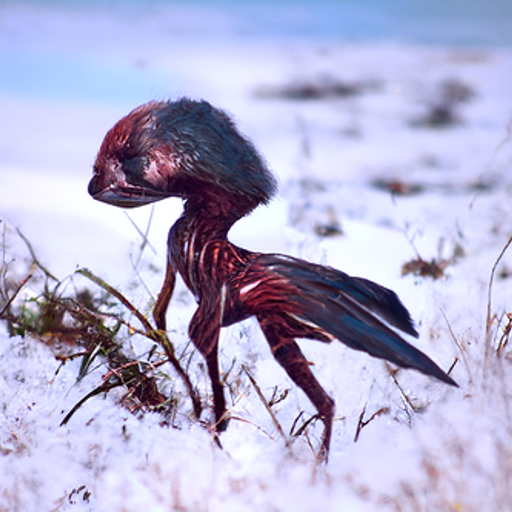
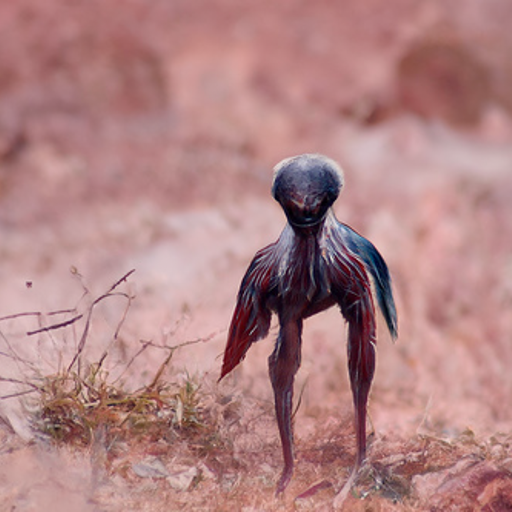
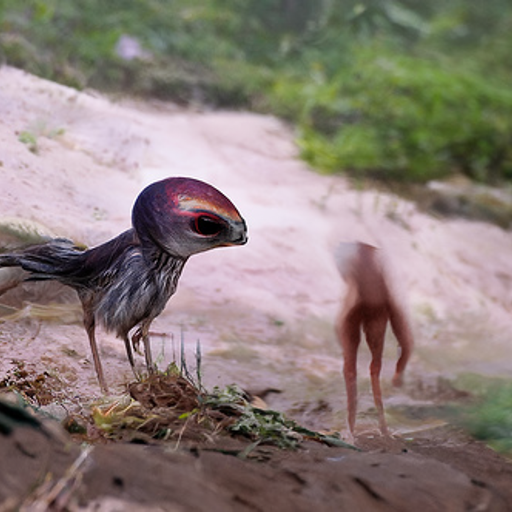
The herling is a small bird about the size of a housecat. They are mostly harmless, but are often pests because of their tendency to steal and hoard shiny objects. A herling will take any object that catches their eye, including jewelry, coins, pencils, pens, forks, spoons, knives, scissors, and anything else they can carry. They usually hide these objects in the hollows of trees or other dark recesses of their environment. They are also known for the bright red feathers that emit a slight luminescent glow in low light.
Tags
Release Date May 23, 2022
Sign up for a free account to claim this creature as your own.

by NovelGens

by Andrew
♥ 1

Discover other creatures

Explore an endless universe of ficticious life on NovelGens.
UNCOMMON

#006 Dune Beetle

Dune beetles are the speedsters of the desert. You wouldn't expect it given their colossal size, but these severely-overgrown bugs can reach speeds of over a hundred miles per hour across flat land. Their flight, however, is much slower and more c...

RARE

#099 Sneacock

Once upon a time, a snake and a peacock found a way to produce an offspring. That offspring's intimidating colors and wholly evil nature quickly made it the dominant species of its island, where it reproduced and overpopulated for centuries before...

COMMON

#034 Mrohl

Mrohls live in enchanted forests where they eat magic berries and hallucinogenic plants. As such, their reactions to adventurers are as predictably intense as their actions are unpredictable. Their droppings are typically made into a hallucinogeni...

RARE

#115 Nebulflat

Nebulflats are strange, half-ox, half-beetle creatures that live deep in the oceans of the planet. They are extremely inquisitive and will often crawl onto land to explore oceanside forests. Despite the fact that they seem to enjoy spending most o...

COMMON

#154 Sizzten muette

The ancient sizzten muette has been a staple of oasis and river life for longer than most other species, acting largely as a peacekeeper among other species over the years. Sizzten muettes can typically be found sipping from water sources and synt...

UNCOMMON

#284 Senjfisk

Senjfisk use thousands of microscopic limbs to move sand around them, enabling them to effectively swim through sand and loose dirt. These nocturnal carnivores also undergo a biological stasis while sleeping, which completely stops all but their m...