COMMON

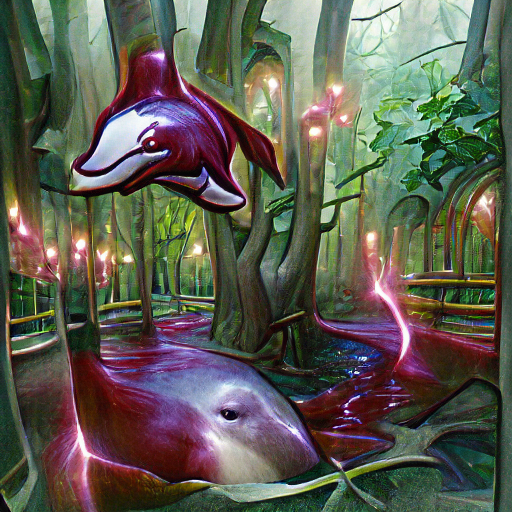
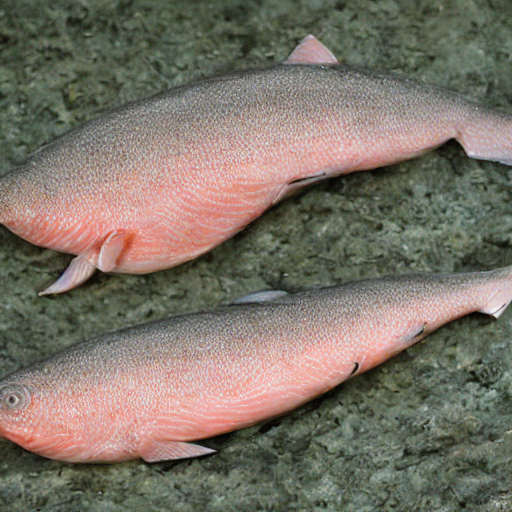
#316 Domestic Szon

For centuries, the nation-state of Szo have primarily fed their people with domestic szon and, in turn, fed their szon with their recently-deceased citizens. As a result, this domesticated variant of the deep-sea szon has taken on a deep symbolism for responsible population control. The domestic szon lacks the large mouth of its oceanic cousin and instead absorbs food particles through its gills, where it's filtered into the stomach. In times of crisis, Szo has been able to economically recover almost entirely from exports of an overabundance of szon.

Found in
Release Date November 08, 2022
Sign up for a free account to claim this creature as your own.

Discover other creatures

Explore an endless universe of ficticious life on NovelGens.
RARE

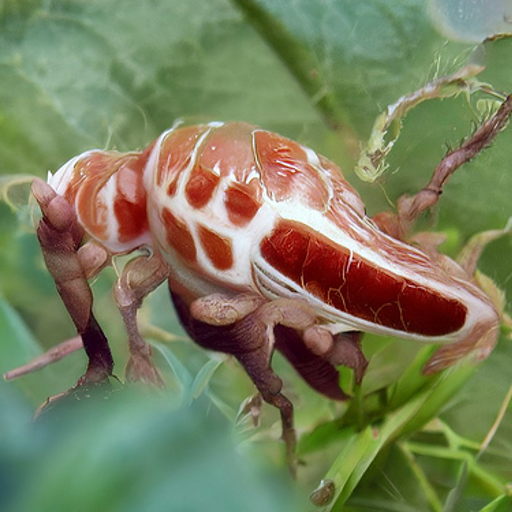
#273 Jideoray

Jideorays are a parasitic orange slime common in the warmer oceans that attaches itself to creatures to feed directly on their skin. Small fish will sometimes allow members of their school to host jideorays, as the toxic pheremone they produce als...

UNIQUE

#164 Finishi

The fabled finishi bird is most notable for its "perfect" camouflage as no living finishi has ever been sighted, even in areas estimated to be completely overrun by them based on the number of finishi carcasses found daily, such as in the titular ...

COMMON

#212 Steevlen

The steevlen is an adorable creature that lives in the forests of the world. They are small, round lion-like creatures (usually about three feet tall) that love to hug and lick. Their saliva contains a mild poison that often can be used to stun at...

COMMON

#223 Flignog

Flignogs are small, furred creatures that can usually be found in trees, grasslands, and caves. They often band together in small tribes, and are known to "bray" at each other to communicate. They are omnivores and spend much time hunting small an...

UNIQUE

#268 Drullar

Drullars are small, terrestrial dragons with a skin made of transparent crystals. Drullars can range in color from a soft white to orange, with large red eyes and a dog-like snout. They are herbivorous and often live in forests and jungles, where ...

UNCOMMON

#284 Senjfisk

Senjfisk use thousands of microscopic limbs to move sand around them, enabling them to effectively swim through sand and loose dirt. These nocturnal carnivores also undergo a biological stasis while sleeping, which completely stops all but their m...