COMMON

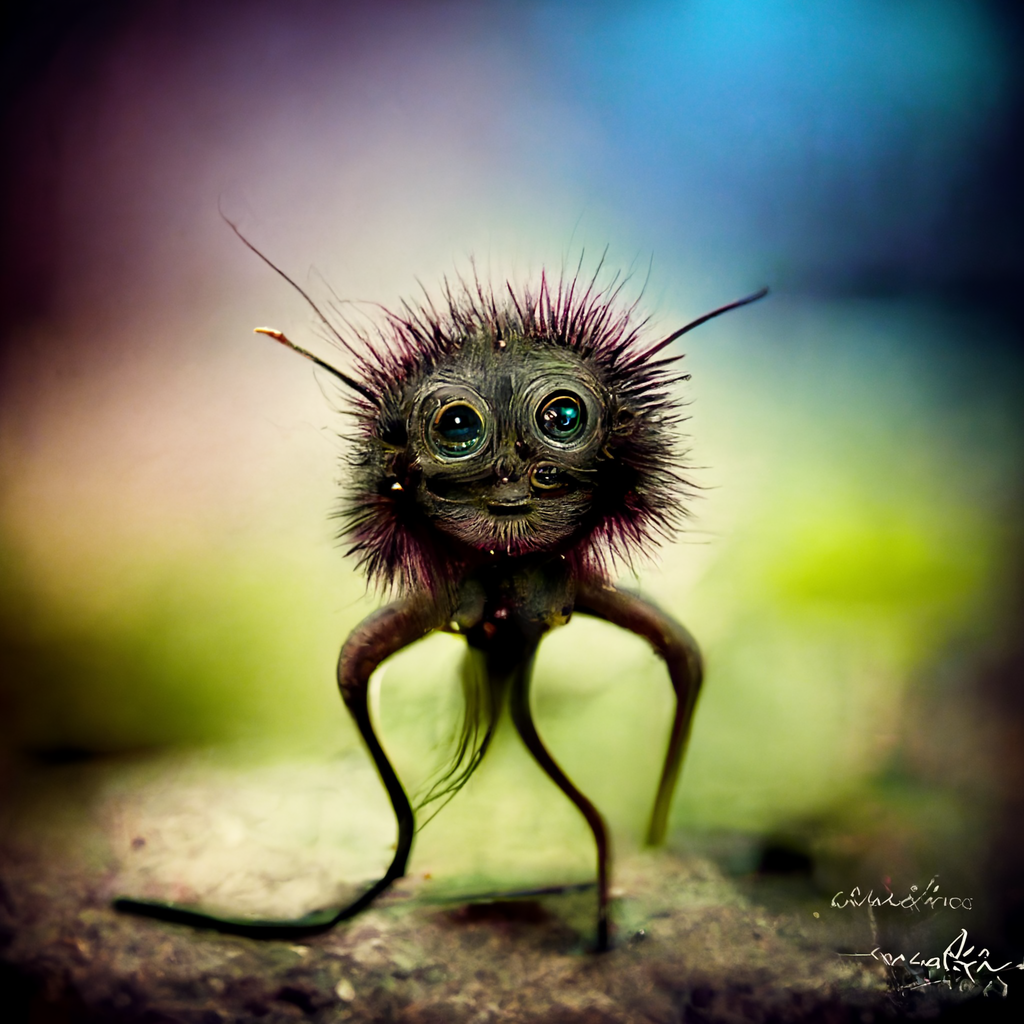
#185 Vuewex

Vuewex are a parasitic skin mite that measure a little under 1 nanometer in width and height. These small critters passively absorb kinetic energy from their host through a reversed osmosis process that looks similar to feeding. A vuewex infection is difficult to to treat due to their small size, but typically clears itself up within a week or two due to their short lifespan and inability to reproduce in most dermal environments. Vuewex are common on islands, where the humidity makes it easier for them to jump from particle to particle in the air towards their next host. Symptoms of a vuewex outbreak include rash, fatigue, and itching.

Release Date June 30, 2022
Sign up for a free account to claim this creature as your own.

Discover other creatures

Explore an endless universe of ficticious life on NovelGens.
UNCOMMON

#042 Heggeh

After spending a millennium with the other few, remaining heggehs trapped in a cavern, new generations of heggeh have completely lost their sight and evolved a slower metabolism that allows them to survive off of almost no food, despite their lar...

COMMON

#080 Elphin

Elphins largely inhabit marshy enchanted forests (usually those with a larger body of water within them), although they have also sometimes been seen in nearby freshwater lakes. Elphins are renouned for their above-surface jump heights and accurac...

UNCOMMON

#137 Gungon

Gungons are medium-sized primates that live in the colder forests of the world. Their white fur is very dense, waterproof, and home to many insect populations. The colorful plants that grow out of their backs serve as camouflage in the spring,...

RARE

#191 Sabbi san

Sabbi san are a phylum of four-legged microscopic tardigrades first described by Austrian zoologist Robby Saab in 2195, who discovered them in a tainted cave water sample. Sabbi sans move quickly in water or on land with a gait that closely resemb...

UNCOMMON

#313 Koben

Kobens are small, furry creatures that have sharpened claws and retractable spikes on their backs. They are generally non-violent and don't attack humans unless provoked. They are foragers that search for food for most of the day, but also enjoy d...

COMMON

#349 Flayansk

The flayansk originates in the far north, in the freezing highlands of Cotsk. Flayansk vary wildly in size throughout their life, growing quickly from the size of rodents to the size of large boulders, then eventually shrinking back to microscopic...