COMMON

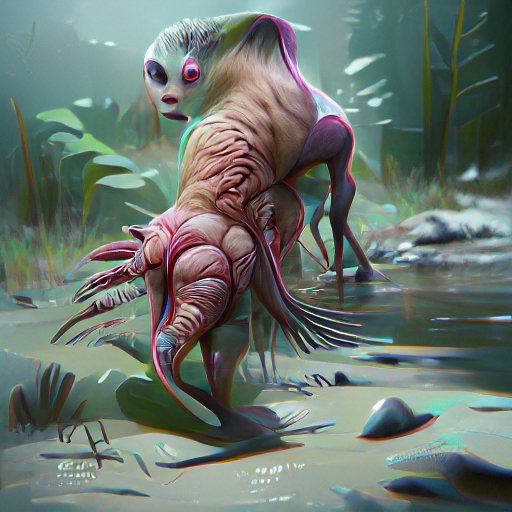
#165 Shaleel

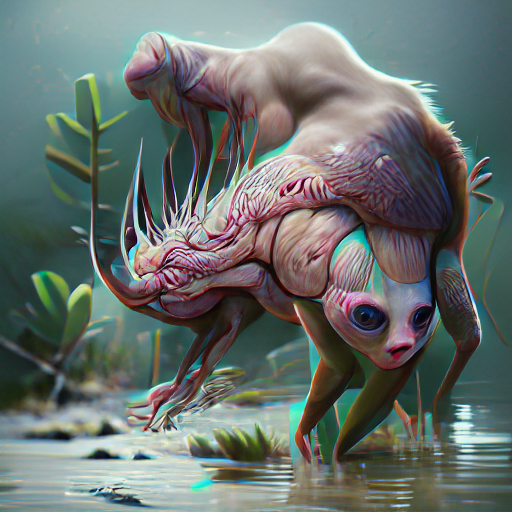
The shaleel is a large, multi-colored reptile that inhabits the swamps and wetlands of Oorzh. Being mostly aquatic, the shaleel usually only comes to land when it is voluntarily wanting to shed its skin. Shaleels have a long, constantly-tapping tail that produces an electrical current that they use to incapacitate fish while hunting. When a predator or a new potential mate approaches, the shaleel will raise its tail high above its head and then slam it down; if the creature is a potential mate, the electrical current will cause an explosion of green sparkles that attracts the mate. If the creature is a predator, the explosion will usually ward it off.
Found in
Release Date June 10, 2022
Sign up for a free account to claim this creature as your own.

by NovelGens

by NovelGens

Discover other creatures

Explore an endless universe of ficticious life on NovelGens.

UNCOMMON

#101 Dhagarem

Dhagarems are a common species of invisible beast that can be found across the world, but most commonly in unsettled areas. They are mostly nocturnal, but their shadows can sometimes be seen in the day if they wake up hungry. It is unclear what dh...

RARE

#115 Nebulflat

Nebulflats are strange, half-ox, half-beetle creatures that live deep in the oceans of the planet. They are extremely inquisitive and will often crawl onto land to explore oceanside forests. Despite the fact that they seem to enjoy spending most o...

RARE

#086 Jhinx

The noble jhinx is an ancient race of sphinx that escaped global disaster and found a new home among the deep jungles in the world, where it lived for several thousand years before being rediscovered as an entirely new species. Jhinx seem to be ca...

COMMON

#077 Fring

Frings are a species with the ability to change their size at will. Permanent aspects of their society like their homes and businesses are incredibly tiny and can only be seen or used while they're their smallest size, but they often size up when ...

RARE

#191 Sabbi san

Sabbi san are a phylum of four-legged microscopic tardigrades first described by Austrian zoologist Robby Saab in 2195, who discovered them in a tainted cave water sample. Sabbi sans move quickly in water or on land with a gait that closely resemb...

UNIQUE

#374 Panileaf

A rare incubating leaf. When hatched, it's roots suck up all the nutrients in the soil and destroys the plants around it. These plants hatch a hundred years after they are taken out of their mother plant. The size of the leaves depends on how fa...