
COMMON

#255 Squirmpod

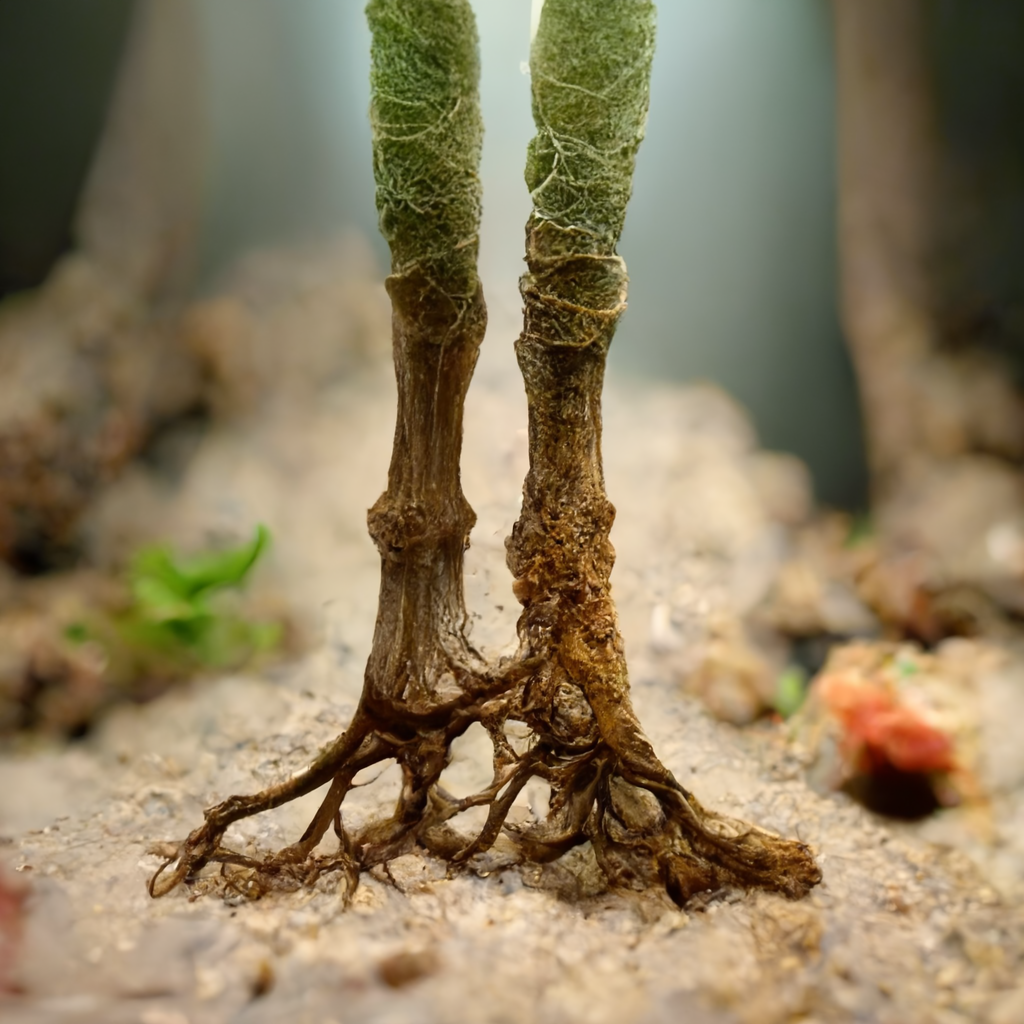
Squirmpods are large, plant-like life forms often found in or around the greater rainforest regions. They are about the size of a small human and appear like a giant tree sprout, with a gray-brown trunk and a dark green, leaf-like canopy sprouting from the top that squirmpods passively absorb ambient nutrients from. Despite their stumpy appearance, they are surprisingly very fast and agile. To get around, they bend their trunk backward, quickly growing a new leg at the base of the trunk and leave their old leg behind. These broken-off leg sections will quickly grow roots of their own into the soil and become a new squirmpod to continue their species' rapid proliferation.
Release Date September 08, 2022
Sign up for a free account to claim this creature as your own.

by Hood
♥ 1

Discover other creatures

Explore an endless universe of ficticious life on NovelGens.

UNCOMMON

#067 Winter Veln

Winter velns hide from predators by appearing flat or misfigured from a clever use of optical illusion camoflage, but they're actually typically very fat creatures. They eat snow and do a sort of reverse-photosynthesis, producing energy from darkn...

COMMON

#073 Pinbin Snake

Pinbin snakes are totally harmless, almost-friendly creatures. They eat grass, lick rocks for fun, and rarely grow more than a foot long. Their eyes are a delicacy among the rich.

RARE

#063 Buyrnwen

Buyrnwen are large snails that live for hundreds of years at a time with the ability to osmose their life force into the complicated chemical structure of their shell. After death, buyrnwen shells decompose and recombine with their body, reviving ...

COMMON

#148 Dacagoth

Dacagoths are small, fluffy mushroom-like creatures that live in grottos and caves. They are about the size of a human thumb and are typically a light shade of gray. They spend most of their time sleeping and eating the rocks and fungus of the cav...

COMMON

#140 Fydern

The fydern is a green creature roughly the size of a human fingernail. It has twelve short legs and two wiggling antennae, which it uses to catch microscopic bugs. Its body is covered in a thick, greasy layer of skin and fat. If a fydern is taken ...

UNIQUE

#343 Qualya

The first record of the gargantuan qualya was recorded by scientists on a digging expedition nearly a century ago, where they reported instrument malfunctions, tremors, and fits of temporary insanity. Since then, those who have studied qualya hypo...