
RARE

#028 Ala Dimio

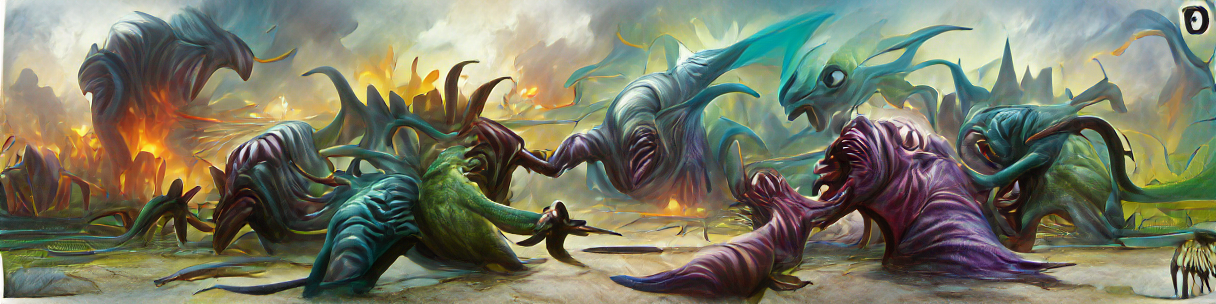
Ala dimios (commonly also referred to as just "alas") are descendents of ancient, magical dragons. While they lack the magical prowess of their ancestors, they've thrived physically and dominate the highest skies with wind attacks and a gigantic hammerhead.

Release Date January 24, 2022
Sign up for a free account to claim this creature as your own.

by Andrew
♥ 1

Discover other creatures

Explore an endless universe of ficticious life on NovelGens.
UNCOMMON

#023 Jibini

The jibini race mutated from field mice in radioactive forests in the east. Over time, both their size and their hunger grew to colossal proportions; when they're not munching on trees to sustain an eternal hunger, they can be seen playing tunnel ...

RARE

#105 Girflet

Girflets are creatures typically found in the damp undergrowth at the base of forest cliffs. When disturbed, they will race away at high speed, firing off seedpods into the air. On the ground, these seedpods bury themselves into loose dirt and spr...

RARE

#087 Red-eyed Deepsquid

It's a rare occurrence for a red-eyed deepsquid to wash ashore, but certain coasts make a habit of it more often than others. It is unclear how the beached deepsquids we've seen have died, nor is it clear where in the deep oceans they call home. D...

UNCOMMON

#114 Rolglu

Rolglu are large, bristly bears that never stop migrating. They have six legs, detachable paws, and stand about eight feet tall. They are herbivores and will often follow farmers' plows, eating the freshly dug roots and other plants that are uncov...

UNCOMMON

#270 Whisper

Whisper bulbs (also affectionally known as "screamers" in windier locales) are sentient plant-animal hybrids that eventually emerge from trees pollinated by The Whisperer. Whispers are also capable of reproducing by infecting the tree with a virus...

COMMON

#307 Kubup

Kubups are brightly-colored arboreal creatures that can jump up to 100 feet high. They are an important part of forest ecosystems, as they feed on dead tree leaves and recycle them into nutrients for the trees. They typically climb to the very top...