UNCOMMON

#101 Dhagarem

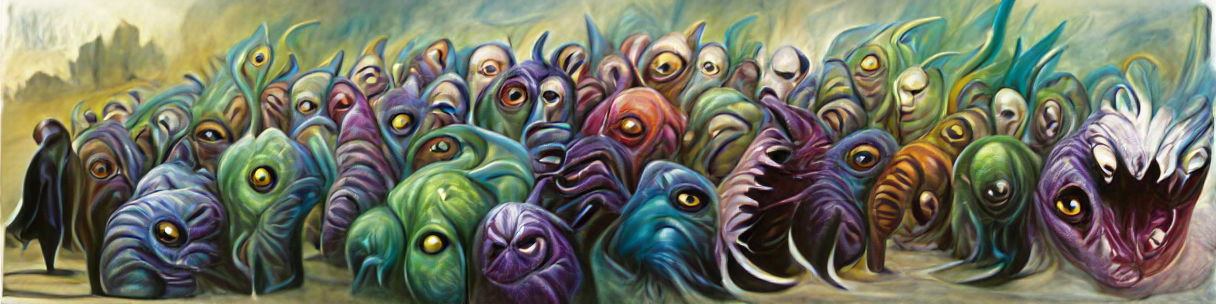
Dhagarems are a common species of invisible beast that can be found across the world, but most commonly in unsettled areas. They are mostly nocturnal, but their shadows can sometimes be seen in the day if they wake up hungry. It is unclear what dhagarems actually eat.

Found in
Release Date April 07, 2022
Sign up for a free account to claim this creature as your own.

Discover other creatures

Explore an endless universe of ficticious life on NovelGens.
COMMON

#049 Emollo

Emollo are a race of intelligent grub-like creatures that evolved arms and legs while living in gigantic, underground cities. They stand approximately three centimeteres tall and typically live around eighty years, spending approximately half of t...

UNCOMMON

#153 Oskurgi

Oskurgis are frog-like creatures that make their homes in the nutrient-rich mud piles found in the swampy forests of the world. Since their skin has a weak, porous texture and is very sensitive to sunlight, oskurgis prefer to remain inside large s...

UNCOMMON

#226 Muludar

The muludar is a species of crab that can be found in many areas of the ocean. They have an average length of six to nine inches and an average weight of eighty pounds. Muludars are typically bright red in color and have large pincers that can be ...

UNCOMMON

#261 Gorgaur

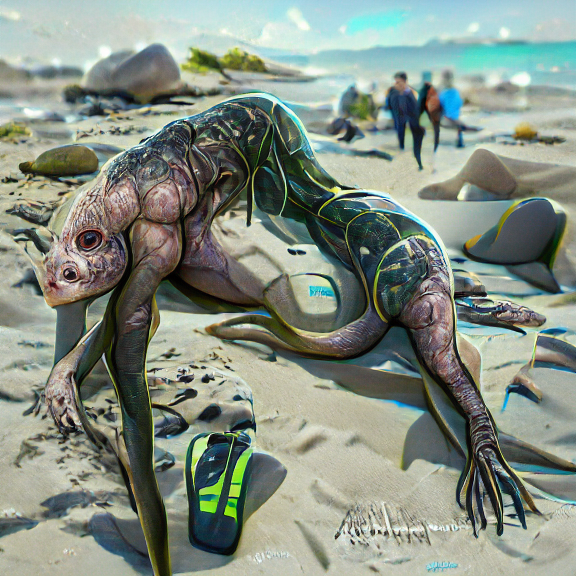
Gorgaurs are a species of multi-legged reptiles common to beaches and the coasts of shallower seas. They are large and aggressive, living in small groups and hoarding small, precious objects that they find. A gorgaur group will typically carve out...

COMMON

#310 Buuzkut

Buuzkuts are a species of small animal that looks a lot like a beetle, but are actually part of the Lepidoptera order. They have large eyes, a chitinous shell, and an intermuscular antenna. Buuzkuts love to eat fizzy drinks and will often hoard ca...

COMMON

#351 Volly

Volly are sturdy, four-legged mammals that live on lush mountaintops, peacefully grazing on grass, flowers, and small mushrooms. Centuries ago, volly were almost entirely domesticated and bred for their restorative tears; over time, however, the h...