UNCOMMON

#295 Digo gaur

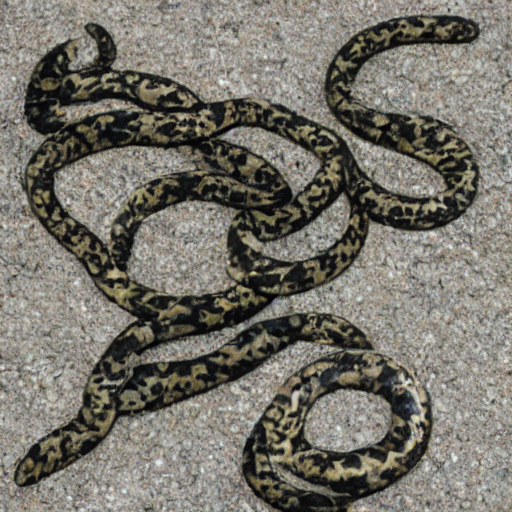
Digo gaur are a domesticated breed of zainko whose closest genetic common ancestor is the pig. Digo gaur were first discovered at the Last Refuge in the far north at the end of the second era and were bred in large numbers for food before the gaur ultimately ran wild with a power vacuum in the ecosystem.

Ages ago, schoolkids used to school each other on the little-known fact that digo gaurs were the only living animal capable of surviving a decapitation. Over several millennia, digo gaurs began to evolve wilder variations of smaller and smaller heads, presently culminating in an elongated neck terminating in a hypersensitive nerve feeler.

Found in
Release Date October 18, 2022
Sign up for a free account to claim this creature as your own.

Discover other creatures

Explore an endless universe of ficticious life on NovelGens.
UNCOMMON

#027 Mipurd Ballow

Mipurd Ballows are a small, primitive species of salamander that are found in the deepest cavities of melting ice sheets. They are extremely hardy and can survive in almost any environment, but they are slow-moving and are often considered weak by...

COMMON

#020 Starbug

Fully-grown starbugs make up the majority of visible lights in the night sky with their planet-sized bodies, but baby starbugs hatch and spend most of their pre-celestial life on abandoned planets until they learn to fly well enough to pierce grav...

UNCOMMON

#042 Heggeh

After spending a millennium with the other few, remaining heggehs trapped in a cavern, new generations of heggeh have completely lost their sight and evolved a slower metabolism that allows them to survive off of almost no food, despite their lar...

COMMON

#049 Emollo

Emollo are a race of intelligent grub-like creatures that evolved arms and legs while living in gigantic, underground cities. They stand approximately three centimeteres tall and typically live around eighty years, spending approximately half of t...

COMMON

#307 Kubup

Kubups are brightly-colored arboreal creatures that can jump up to 100 feet high. They are an important part of forest ecosystems, as they feed on dead tree leaves and recycle them into nutrients for the trees. They typically climb to the very top...

COMMON

#349 Flayansk

The flayansk originates in the far north, in the freezing highlands of Cotsk. Flayansk vary wildly in size throughout their life, growing quickly from the size of rodents to the size of large boulders, then eventually shrinking back to microscopic...