COMMON

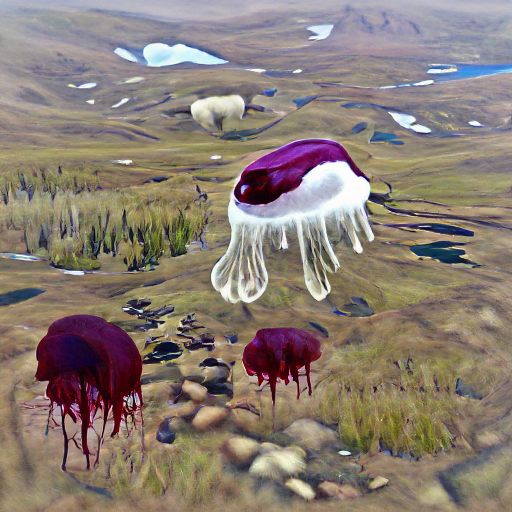
#045 Egalomo

Schools of cloud-sized egalomos float high in the sky, always in search of their next meal. To attack their prey, they swoop down from the sky and suffocate creatures by wrapping around them and constricting their jellyfish-like body. During digestion, the prey's blood courses through the egalomo's body, giving it a distinct red-purple color before it eventually returns to a fluffy white.

Release Date February 10, 2022
Sign up for a free account to claim this creature as your own.

Discover other creatures

Explore an endless universe of ficticious life on NovelGens.

RARE

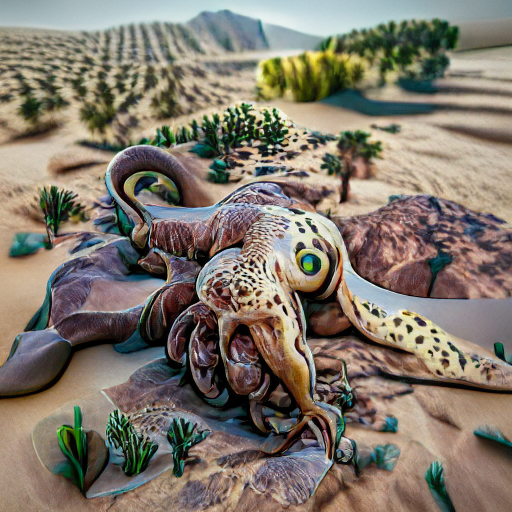
#062 The Acolyte

Not much is known about the acolyte, including whether it's one creature or many. However, many travelers have reported that they've witnessed the acolyte while dying in nearby deserts. The description of the experience varies wildly from person t...

COMMON

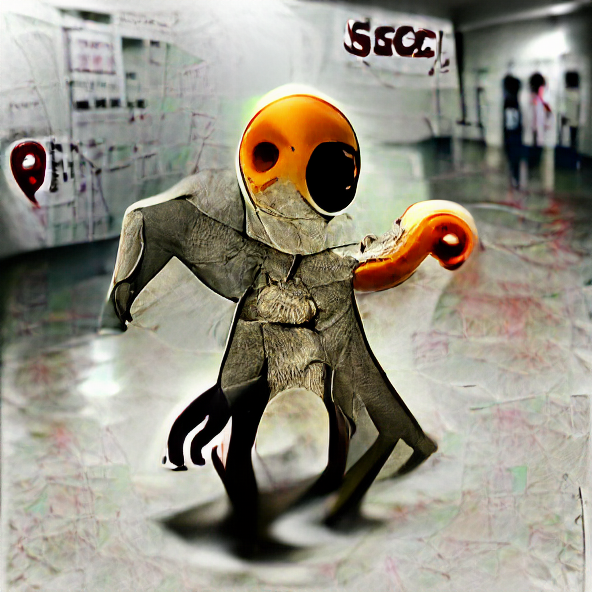
#054 Uulu'd

Uuludes exist in the dimensional plane that we only ever experience through nightmares, and therefore they live in a constant state of chaos, illogic, and fear. Their unilateral aggression seems to stem from severe trauma and terror inflicted by t...

RARE

#086 Jhinx

The noble jhinx is an ancient race of sphinx that escaped global disaster and found a new home among the deep jungles in the world, where it lived for several thousand years before being rediscovered as an entirely new species. Jhinx seem to be ca...

COMMON

#126 Fexodo

Fexodos are small, furry animals that somewhat resemble a cross between a bat and a mouse. They live in herds of around fifteen and need very little food, subsisting mainly on insects and fruits. Fexodos are social and affectionate animals, and ar...

UNCOMMON

#274 SLP-059

SLP-059 is a stable organic mutation of the venus fly trap, successfully designed and created at the [redacted] facility in [redacted], Virginia. SLP-059 can be recognized by its thick, mossy feet and long bristles which can extend up to six inche...

COMMON

#307 Kubup

Kubups are brightly-colored arboreal creatures that can jump up to 100 feet high. They are an important part of forest ecosystems, as they feed on dead tree leaves and recycle them into nutrients for the trees. They typically climb to the very top...