UNCOMMON

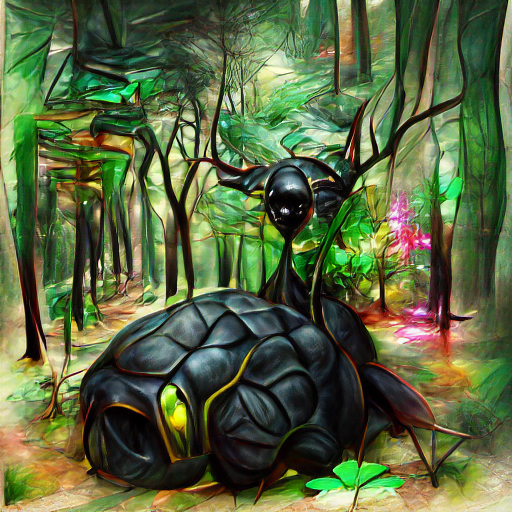
#138 Glorbon

Commonly mistaken as large, black boulders, glorbons rarely ever move except to subtly shape small cavities at the base of their bulbous body. They then secrete a sweet-smelling fragrance to lure small critters into the holes, where they are quickly trapped and absorbed by the glorbon. Their extremely-slow metabolism allows glorbons to go years between meals. Although they are extremely hardy and durable, they also have no active defense mechanism and therefore fall prey to the more persistent of predators, such as humans. Glorbon chitin is often used in construction, providing great insulation and support.

Release Date May 14, 2022
Sign up for a free account to claim this creature as your own.

Discover other creatures

Explore an endless universe of ficticious life on NovelGens.
UNCOMMON

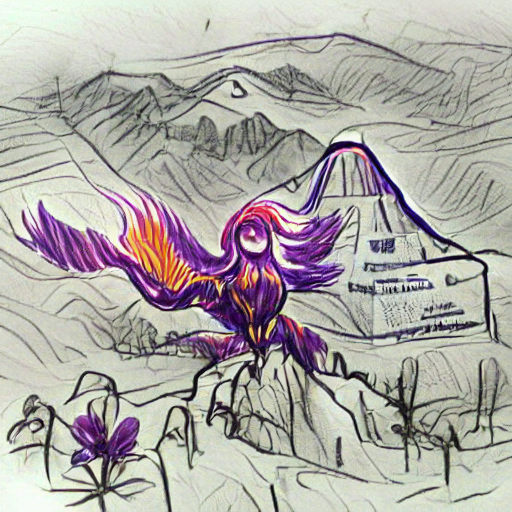
#193 Udeneth

The udeneth is a large, light-colored creature that somewhat resembles a llama. It has no ears or nose and must rely on sight and touch to find its food. Udeneths are found on mountainsides where they frequently burrow into the snow, where they wi...

COMMON

#263 Vindsmen

After the devastating CK-295 meteor impact, what little life survived on planet P-192-856B had to radically evolve in order to survive the planet's new radioactive atmosphere. Vindsmen were once a variant of the common earth ape whose DNA began t...

UNCOMMON

#224 Larroh

Larrohs are flying insects that can be found in the high mountains of the world, scaling the peaks and drinking from glacial lakes. They are extremely shy and will dissipate their bodies into water vapor and their substance into their surroundings...

RARE

#233 Pewarra

On the plains near the city, you can find the wingless pewarras that live in large herds, best known for their concave skeleton and recognizable gait. When threatened by a predator, pewarras will huddle together in a large circle and take turns ma...

RARE

#267 Groxus

The groxus is the largest known insect in the world. They can grow to be 300 feet long and weigh up to 60 tons. Groxuses are nocturnal, feeding on large mammals and each other. They can be found in forests and deserts throughout the world. Because...

COMMON

#349 Flayansk

The flayansk originates in the far north, in the freezing highlands of Cotsk. Flayansk vary wildly in size throughout their life, growing quickly from the size of rodents to the size of large boulders, then eventually shrinking back to microscopic...