COMMON

#280 Kora

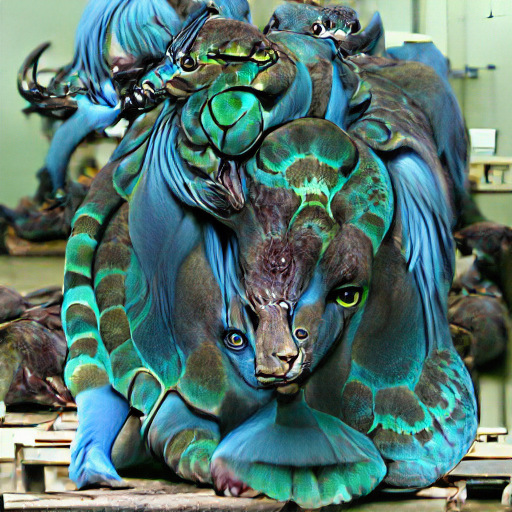
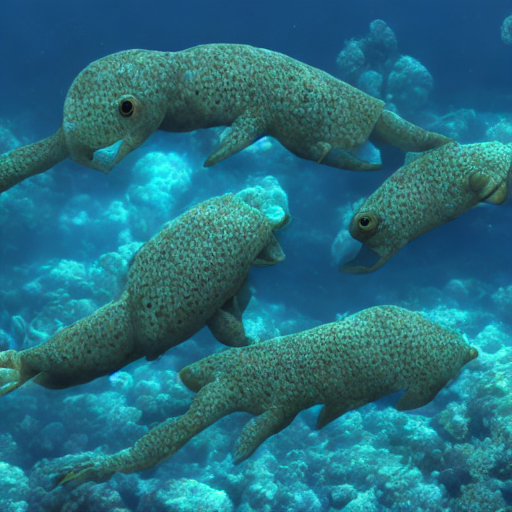
The kora are an aquatic species of intelligent coral common in warmer ocean climates that have historically been an enabler of oceanic human societies in areas they couldn't otherwise exist. Although kora harden into a stony toughness after death (that can be used in everything from construction to weaponry), there's also a short window after their death in which they're still soft enough to cook. Kora reproduce quickly and often, often dominating their local ecosystem. In times where there aren't enough food sources, kora can also often be found floating along the water's surface where they use a variation of photosynthesis to absorb energy from sunlight.

Found in
Release Date October 03, 2022
Sign up for a free account to claim this creature as your own.

Discover other creatures

Explore an endless universe of ficticious life on NovelGens.
UNCOMMON

#021 Red Vasamee

The Red Vasamee is a rodent-like creature that is notable for evolving over time to be strictly vegetarian after a meat-bourne illness nearly caused their extinction. These days they prowl through fields looking for seeds and berries, but will als...

RARE

#028 Ala Dimio

Ala dimios (commonly also referred to as just "alas") are descendents of ancient, magical dragons. While they lack the magical prowess of their ancestors, they've thrived physically and dominate the highest skies with wind attacks and a gigantic h...

RARE

#052 D'Geft

D'geft are stone elementals that pass freely through mountains and stone, living solitary lives. Catching a d'geft binds his will to yours, enabling the binding one to control that d'geft's powers as if they were your own. When d'geft die, their s...

COMMON

#111 Quernug

The quernug is a strange creature that resembles a sheep. They stand about 2ft tall and are covered in purple, matted wool, have a frog-like mouth, and have two horns on the sides of their head. Quernugs make a strange barking sound and will hop a...

COMMON

#043 Volcrano

Every volcano has at least one volcrano maintaining it. They do their best to keep out of sight but volcranos are bulky and slow. Volcanos as a species have been fate-bound to feed the volcanic lava until the end of time in order to keep it from s...

RARE

#191 Sabbi san

Sabbi san are a phylum of four-legged microscopic tardigrades first described by Austrian zoologist Robby Saab in 2195, who discovered them in a tainted cave water sample. Sabbi sans move quickly in water or on land with a gait that closely resemb...