UNCOMMON

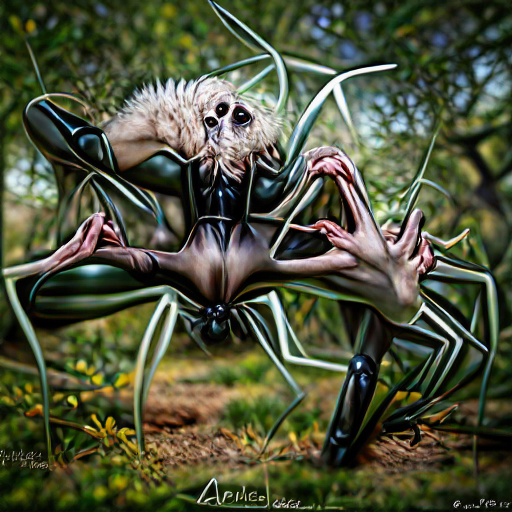
#180 Scordul

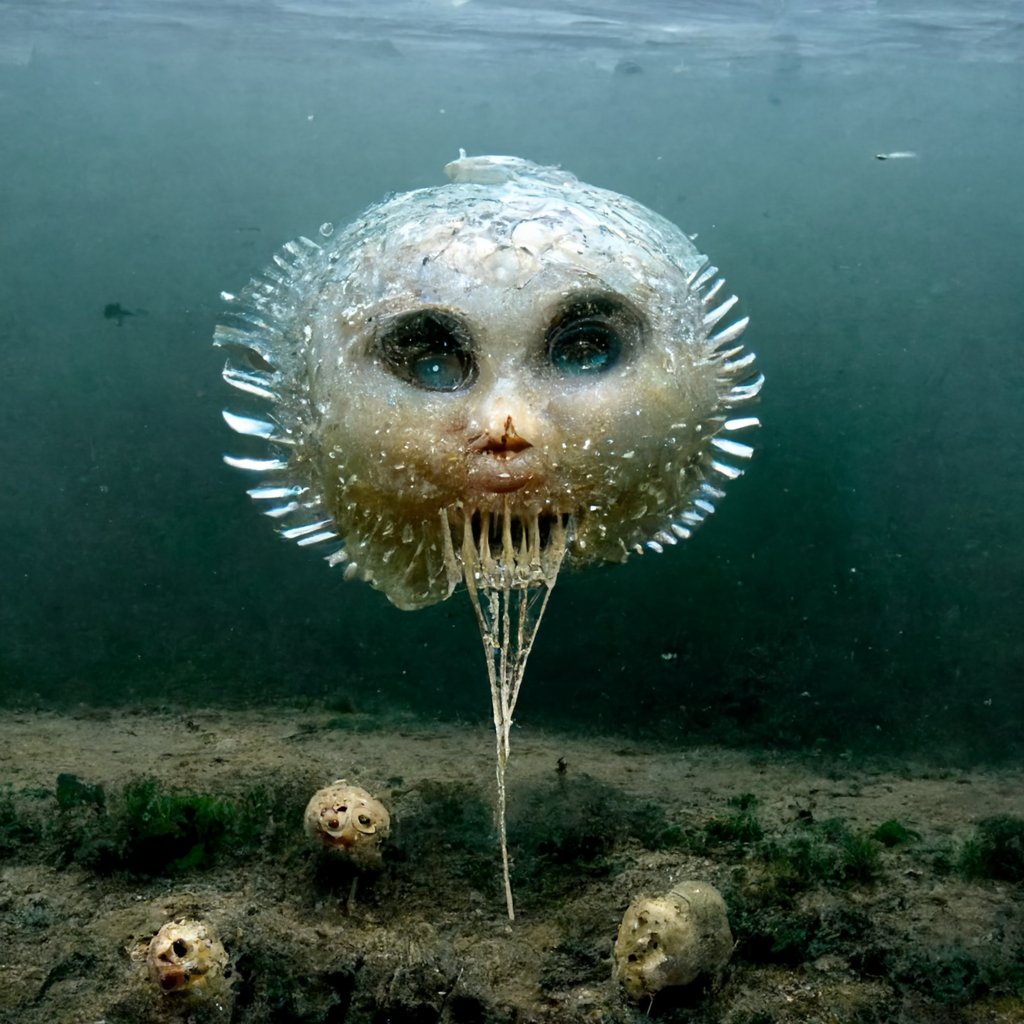
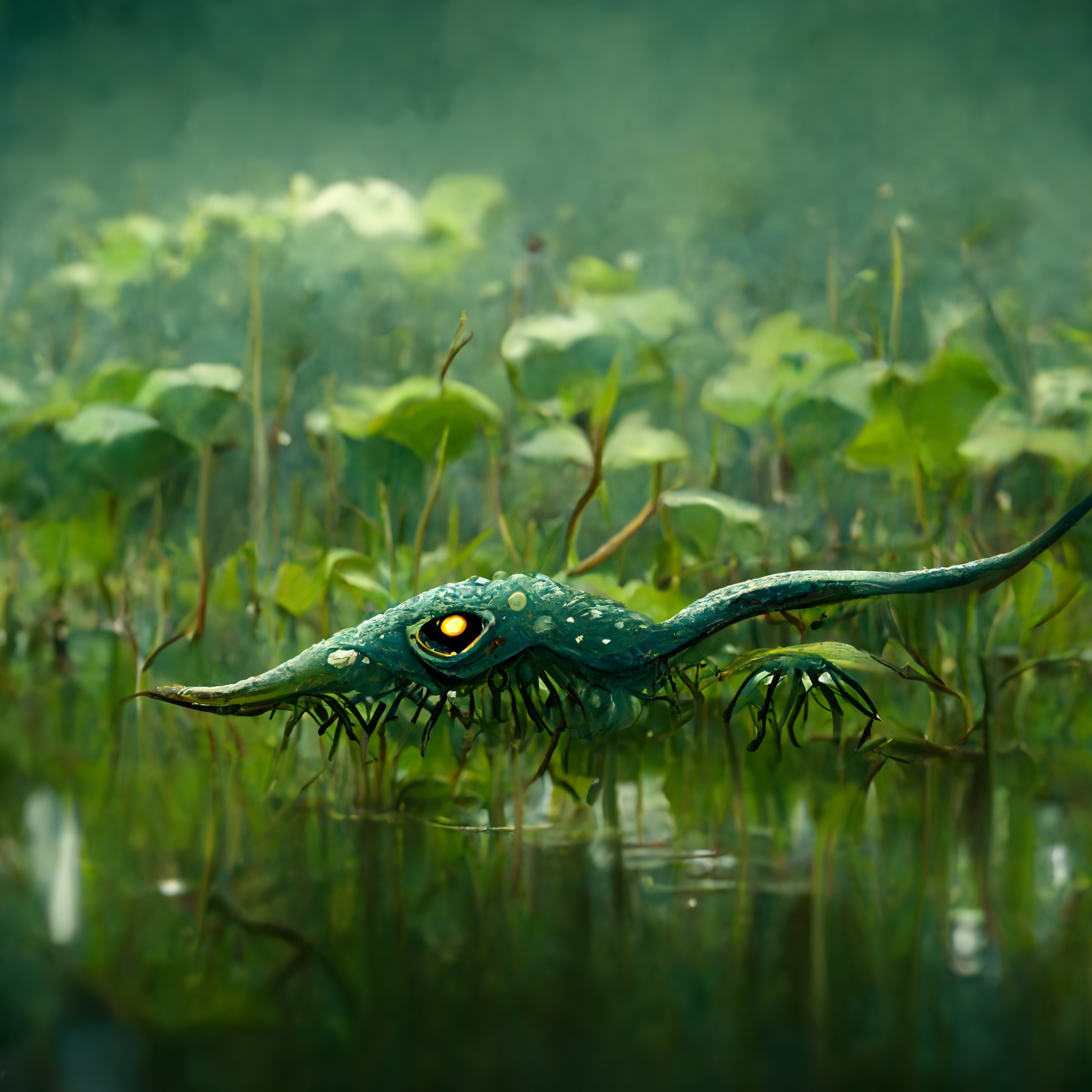
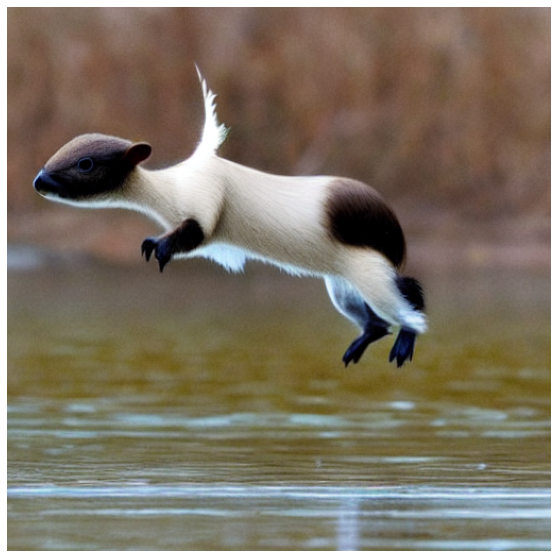
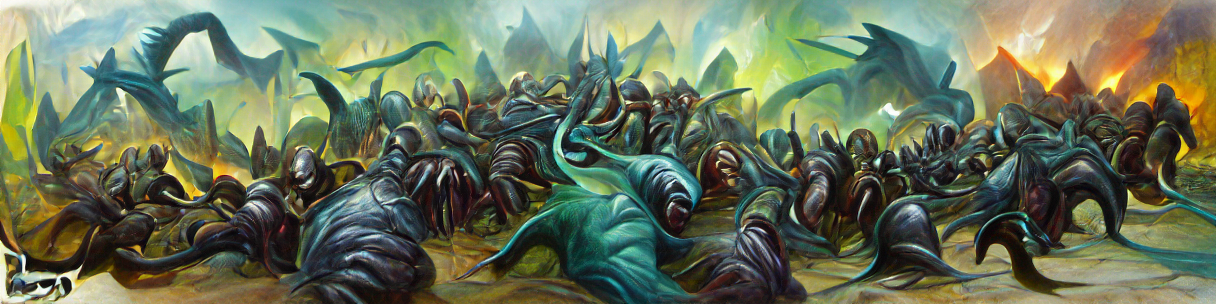
Scorduls are large, slow-moving amorphous blobs of flesh and bone that live in the forest. They are nocturnal and will often hide in caves or behind rocks, waiting for prey to come close. They can also camouflage themselves by changing their shape through a complicated bone-reconfiguration process or by coating themselves with a thin membrane of clear mucus that reflects light and smell. They are highly poisonous and will often lay in wait for days or weeks for the perfect time to strike their prey. A scordul bite is extremely painful, and anyone unfortunate enough to survive an encounter will likely lose at least the limb in which the bite occurred, but maybe more.

Release Date June 25, 2022
Sign up for a free account to claim this creature as your own.

Discover other creatures

Explore an endless universe of ficticious life on NovelGens.
UNCOMMON

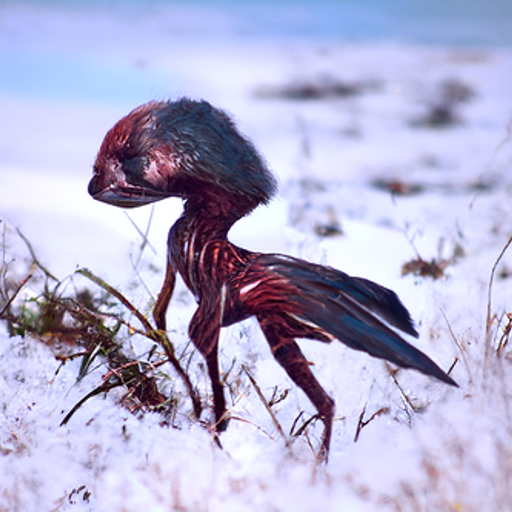
#101 Dhagarem

Dhagarems are a common species of invisible beast that can be found across the world, but most commonly in unsettled areas. They are mostly nocturnal, but their shadows can sometimes be seen in the day if they wake up hungry. It is unclear what dh...

UNCOMMON

#100 Ignadian

The ignadians are vaguely amorphous cave toads who live in the deepest underground lakes of the world, especially near volcanos. Because they spend much of their time in a liquid state, they have developed the ability to survive at extremely high ...

COMMON

#201 Jigbat

Jigbats are large insects that resemble blue bats. They can be found throughout the world's forests and feed on insects, small birds, and berries. They sting their prey with a powerful paralytic venom that stains the skin blue, which they often us...

COMMON

#093 M'li

M'li are electrically-charged, gelatinous airfish closely related to the ancient jellyfish of oceans. Fleets of m'li are often cared for by farmers who appreciate the m'li's cross-pollination of battery fields. The electrical current that emanates...

COMMON

#235 Worgant

Worgants are a species of small were-ants that live in packs in the northern forests. They have a symbiotic relationship with the betzkra woodpeckers, who make holes in the bark of trees to get at grubs and other insects, which worgants then turn ...

COMMON

#349 Flayansk

The flayansk originates in the far north, in the freezing highlands of Cotsk. Flayansk vary wildly in size throughout their life, growing quickly from the size of rodents to the size of large boulders, then eventually shrinking back to microscopic...