RARE

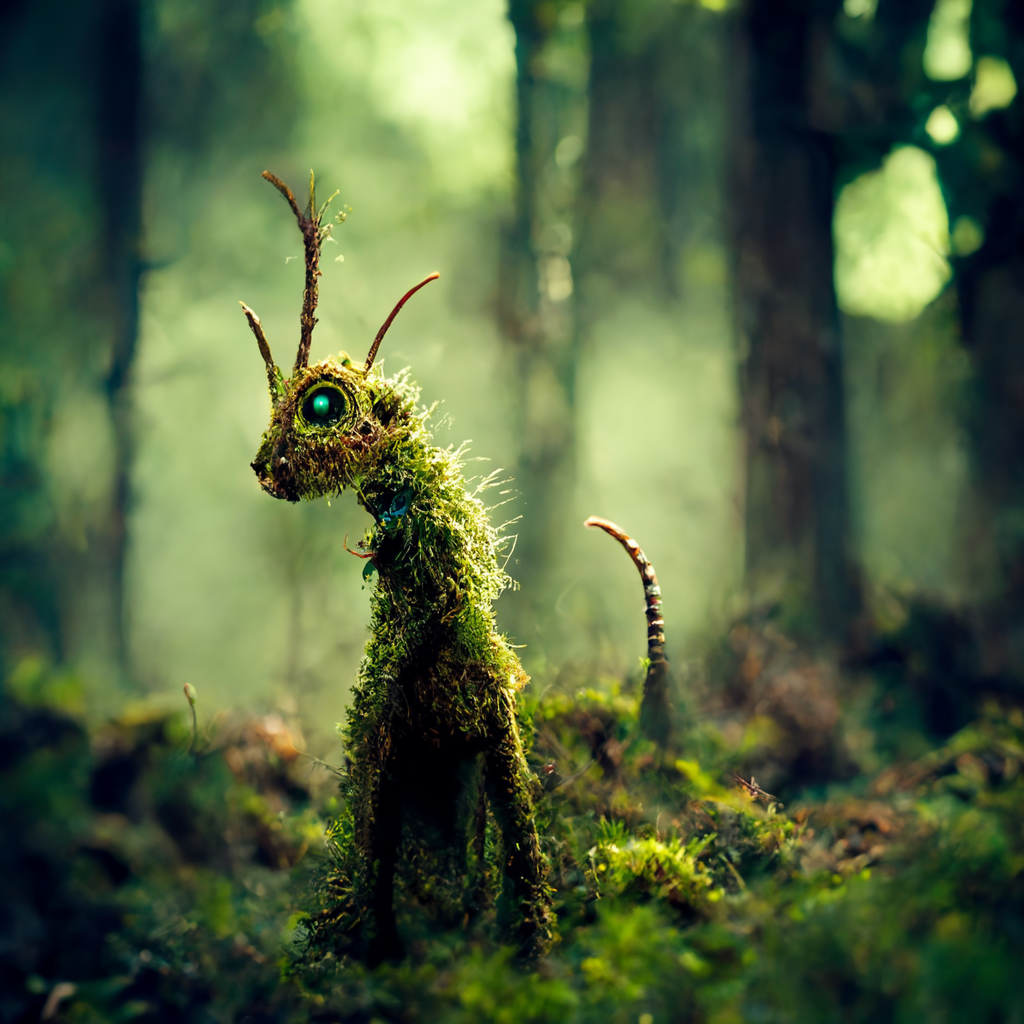
#105 Girflet

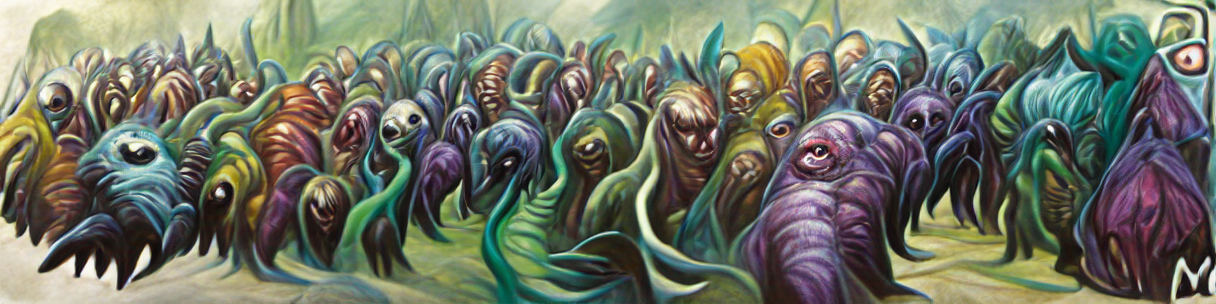
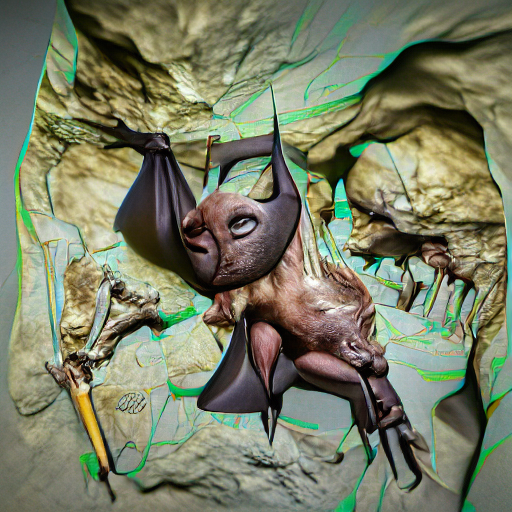
Girflets are creatures typically found in the damp undergrowth at the base of forest cliffs. When disturbed, they will race away at high speed, firing off seedpods into the air. On the ground, these seedpods bury themselves into loose dirt and sprout into a full-grown tree, making girflets great for reforesting an area.

Release Date April 11, 2022
Sign up for a free account to claim this creature as your own.

Discover other creatures

Explore an endless universe of ficticious life on NovelGens.
COMMON

#060 Brugnul

Brugnuls are microscopic parasites that can be found in most environments. They are commonly found in the bodies of other creatures, but can also be found on the ground, in water, and in the air. They are extremely hard to detect, and can be diffi...

UNCOMMON

#114 Rolglu

Rolglu are large, bristly bears that never stop migrating. They have six legs, detachable paws, and stand about eight feet tall. They are herbivores and will often follow farmers' plows, eating the freshly dug roots and other plants that are uncov...

COMMON

#148 Dacagoth

Dacagoths are small, fluffy mushroom-like creatures that live in grottos and caves. They are about the size of a human thumb and are typically a light shade of gray. They spend most of their time sleeping and eating the rocks and fungus of the cav...

COMMON

#166 Zaigarch

Zaigarchs are translucent jellyfish-like creatures that live in the magma chambers of their planet. They have bioluminescent organs that allow them to be seen in the dark recesses of their native caves, and the light they emit provides ocular nutr...

COMMON

#240 Bargrim

The bargrim is a small, nocturnal creature which is native to the forests of the world. It may look like an ordinary butterfly when it is resting, but its natural camouflage belies its fearsome nature. It has sharp teeth, tough scales, and can qui...

COMMON

#211 Dromlek

Dromleks are intelligent, flightless birds that originate from a far-off galaxy where gravitational directionality frequently changes, and dromleks therefore evolved omni-directional legs to compensate for sudden directional shifts. They are able ...