RARE

#191 Sabbi san

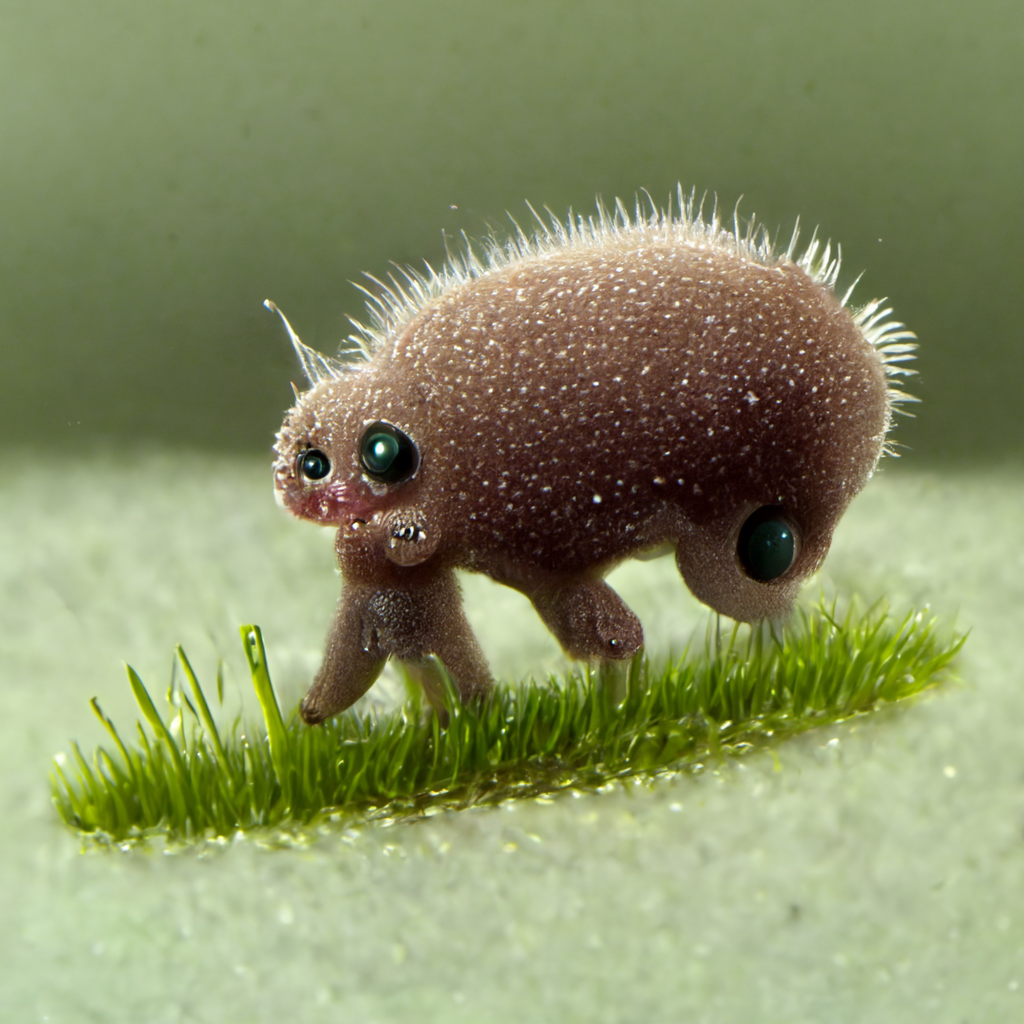
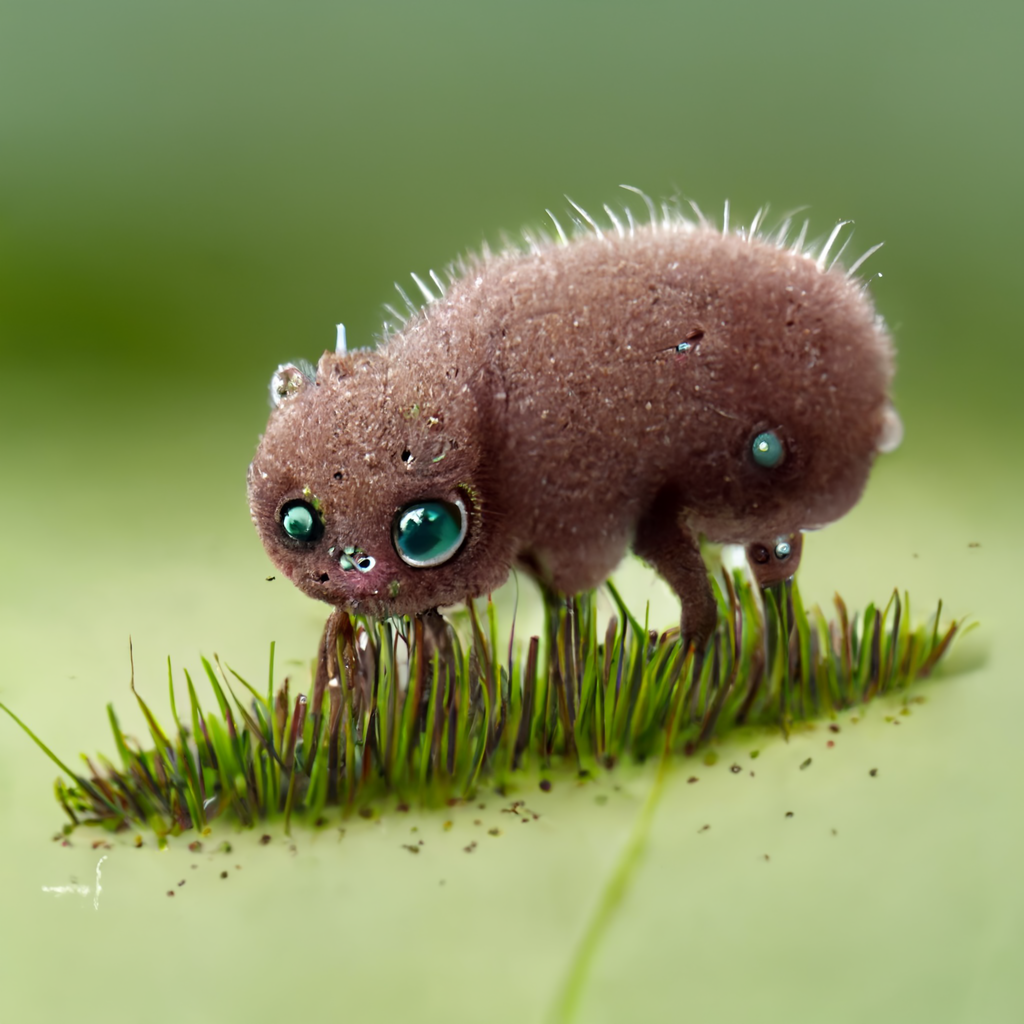
Sabbi san are a phylum of four-legged microscopic tardigrades first described by Austrian zoologist Robby Saab in 2195, who discovered them in a tainted cave water sample. Sabbi sans move quickly in water or on land with a gait that closely resembles that of a trotting goat, although they are also capable of supporting weight on their hind legs and walking bipedally. While sabbi sans were discovered in and often frequent wet caves, they've also been discovered in all kinds of wet climates, and even migrate through natural water cycles and rainfall.
Found in
Release Date July 06, 2022
Sign up for a free account to claim this creature as your own.

by NovelGens

Discover other creatures

Explore an endless universe of ficticious life on NovelGens.
UNCOMMON

#131 Phembluf

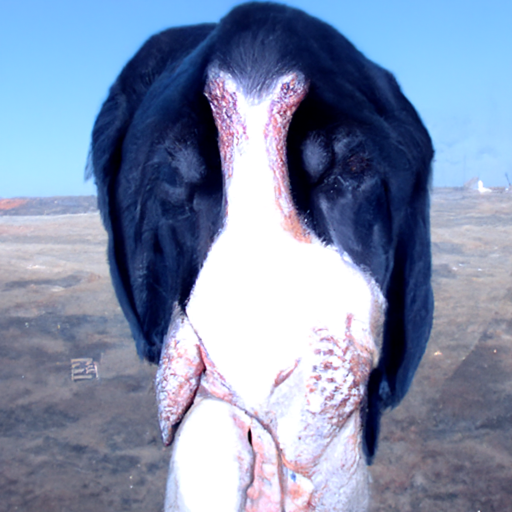
Phemblufs are large, blue fish that live in the deeper, frozen parts of the northern oceans. Phemblufs average two to three feet long and have a long black, snout with a mouth full of razor-sharp teeth that can drill through ice with ease. Phemblu...

COMMON

#244 Angelsilk

The angelsilk jellyfish floats through the air on a cloth-like fabric made of the protein chains they produce for skin. Angelsilk are also known as ballgown angels to those who live near enough to the coast to see them. It is not uncommon for thes...

COMMON

#174 Sanguaven

The night ravens with luminous, blood-red eyes in the south are colloquially known as sanguavens, although they've had many names throughout history. Sanguaven eyes have a unique reflective property that redshifts light and amplifies its reflectio...

UNCOMMON

#274 SLP-059

SLP-059 is a stable organic mutation of the venus fly trap, successfully designed and created at the [redacted] facility in [redacted], Virginia. SLP-059 can be recognized by its thick, mossy feet and long bristles which can extend up to six inche...

UNCOMMON

#305 Goursherpoid

Goursherpoids are aggressive reptiles that have large, flat sensors in their eye which allows them to see every wavelength of light. They have a long t tail that they can use defensively to whack their predators, and they have a bone behind their ...

COMMON

#349 Flayansk

The flayansk originates in the far north, in the freezing highlands of Cotsk. Flayansk vary wildly in size throughout their life, growing quickly from the size of rodents to the size of large boulders, then eventually shrinking back to microscopic...