COMMON

#119 Ossl

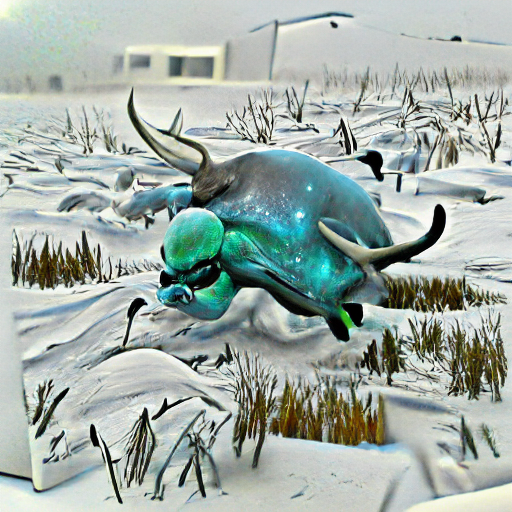
Ossles are small creatures that are found in warmer tundras. They are about the size of a small cat and resemble a cross between a tortoise and a beetle, albeit with two large, boney antlers that end in sharp claws. Despite their fearsome appearance, they are actually quite timid, unless they are provoked. You can tell the age of an ossl by the number of rings in their antlers, which grow thicker every year until they're too heavy to carry.

Found in
Release Date April 25, 2022
Sign up for a free account to claim this creature as your own.

Discover other creatures

Explore an endless universe of ficticious life on NovelGens.
COMMON

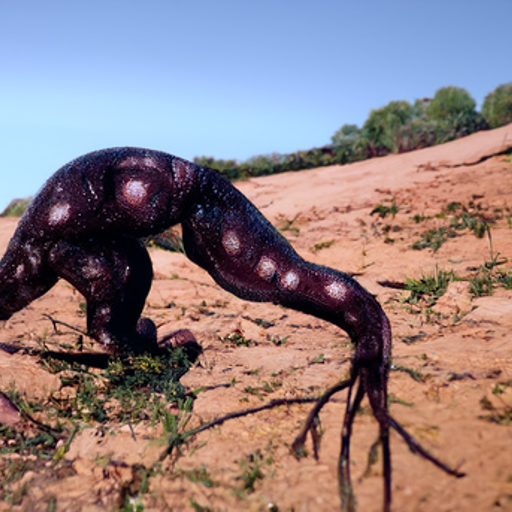
#010 Vruntyk

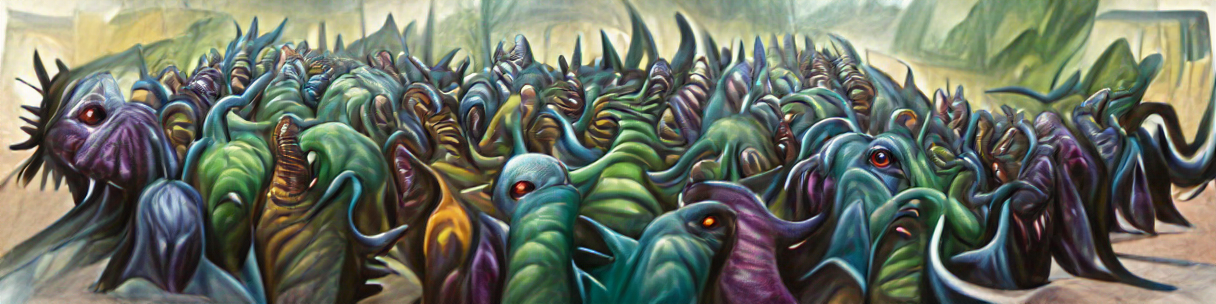
Vruntyks are an ancient race of reptile that lived underground in caves for millennia before emerging and finding refuge in deserts and mountains across the globe. They're unfathomably fast and ferocious and live in gigantic, migrating communities...

COMMON

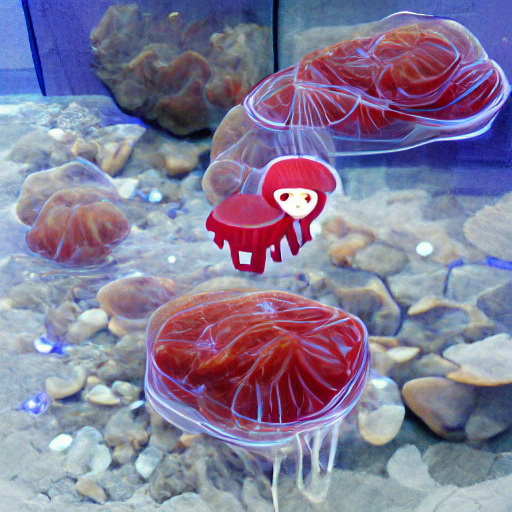
#093 M'li

M'li are electrically-charged, gelatinous airfish closely related to the ancient jellyfish of oceans. Fleets of m'li are often cared for by farmers who appreciate the m'li's cross-pollination of battery fields. The electrical current that emanates...

UNCOMMON

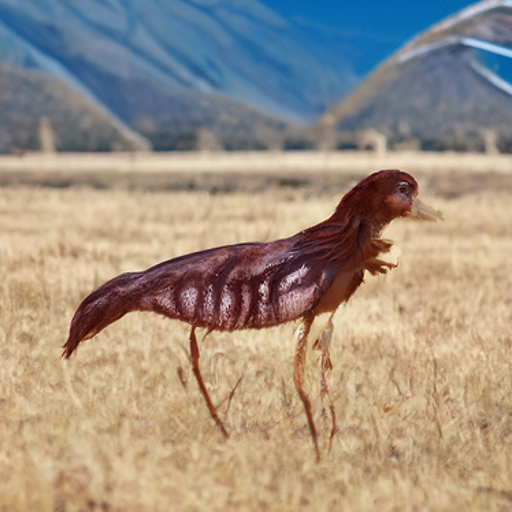
#229 Tehrer

The tehrer is a small, flightless bird originating from volcanic islands in the south. Tehrers are extremely fast runners and use their powerful legs to leap from tree to tree, often reaching airborne heights and speeds such that they unintentiona...

RARE

#220 Phlanghia

Phlanghia are interdimensional mass collections that collapse into a large rabbit-like shape when bearing our dimension. These ancient creatures are said to have been around before time or space and seen the evolution of our world throughout time....

UNCOMMON

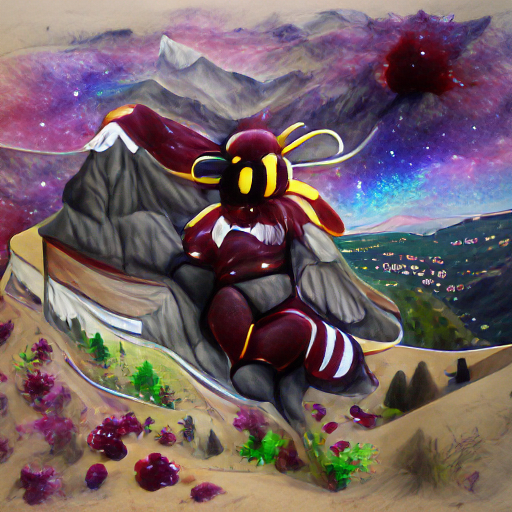
#264 Vibulant

Vibulants are massive insects. A single vibulant can be up to 10 feet long and weigh up to half a ton. They can be found in many different environments, including deserts, mountains, and fields. Despite their size, vibulants are generally harmless...

UNCOMMON

#284 Senjfisk

Senjfisk use thousands of microscopic limbs to move sand around them, enabling them to effectively swim through sand and loose dirt. These nocturnal carnivores also undergo a biological stasis while sleeping, which completely stops all but their m...