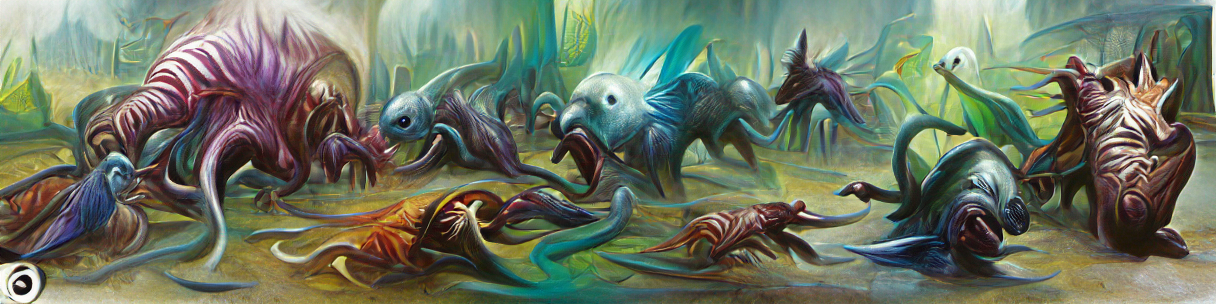
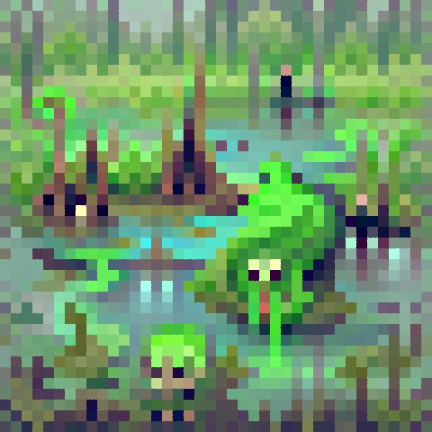
Currently...
Biome Modifiers
Holy site
This biome is a holy site with historical significance for a local religious group.
Hailstorms
This biome is prone to frequent hailstorms.
Nuclear winter
Ash coats this biome with a thick, white film.
Creatures found in the Pir Swamp
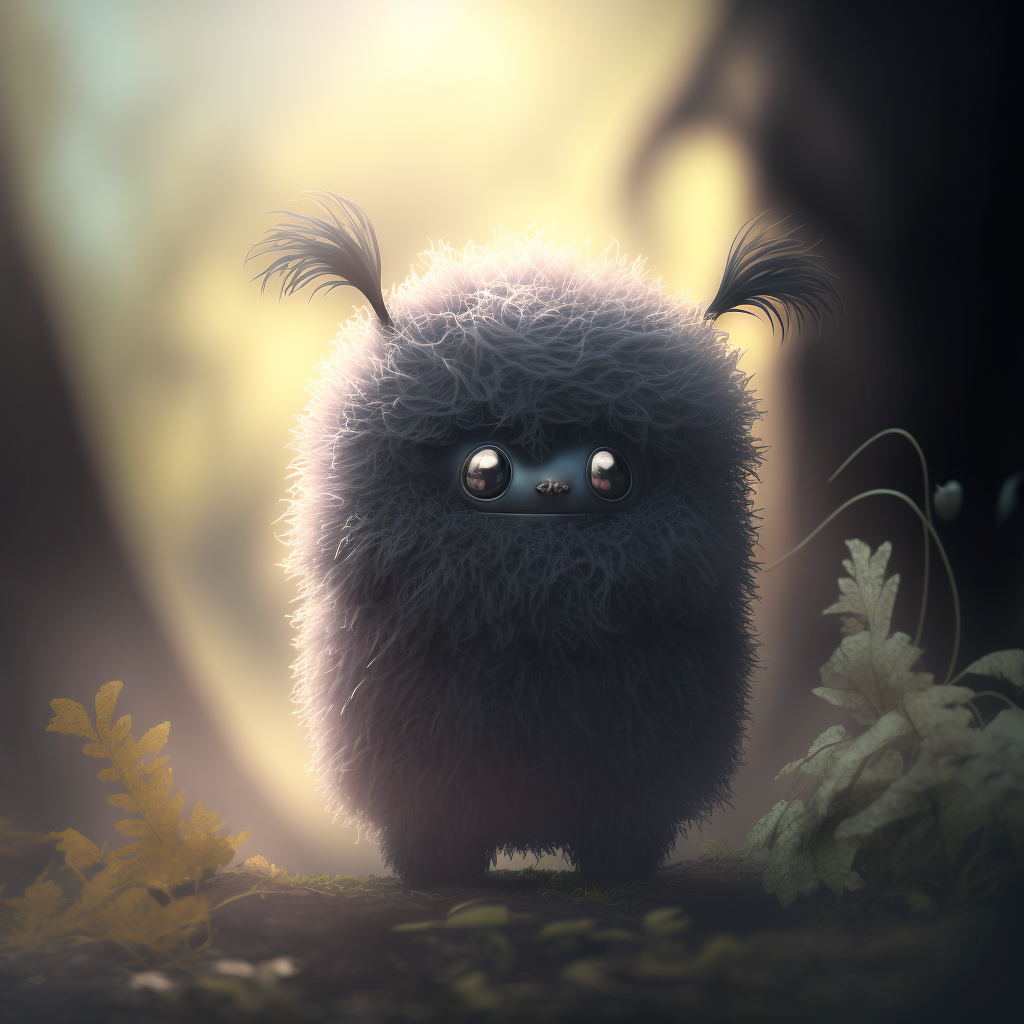
RARE
#340 Skaða
The skaða are an ancient race of corrupted energy, capable of destroying entire planets in the blink of an eye. It is said that skaða lose one of their countless eyes every time they witness the death of another universe, and the Elder skaða is said to have only one eye remain...
#340 Skaða
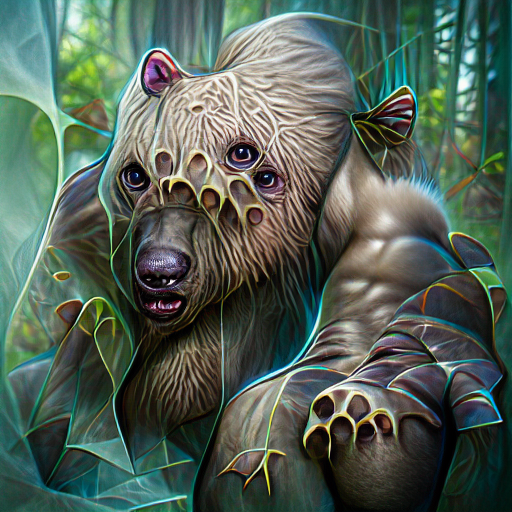
UNCOMMON
#139 Ozanif
Ozanifs are a large variant of the common swamp bear. They are covered in a thick, matted fur that is resistant to water and provides excellent warmth in cold conditions. Ozanifs have s a long, pointed nose and sharp teeth which constantly ooze a sweet honey-like substance. It...
#139 Ozanif

COMMON
#358 Mollang
Mollang are small marsupials often found throughout wetlands and jungles. They live long lives despite the poisonous fungus that commonly grows on their short fur, which also protects them from most predators thanks to the highly-contagious nature of the fungi's toxins. Howeve...
#358 Mollang

RARE
#011 Ssene
Ssenes are strange, shapeshifting creatures that configure parts of their body to mimic specific features of any creatures they see, rather than transforming into a copy of their whole body. This "bioremixing" property typically results in horrible, unnatural amalgamations dep...