RARE

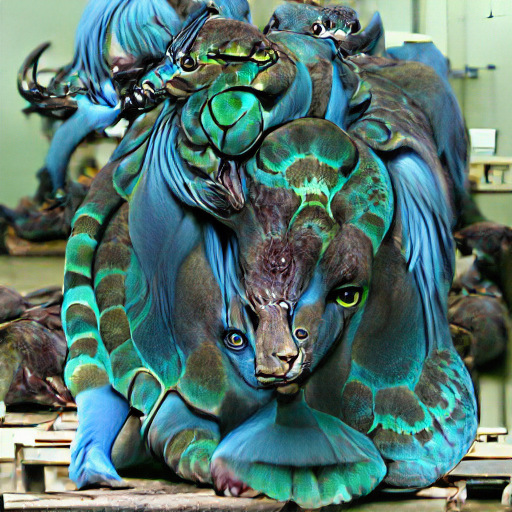
#118 Herenella

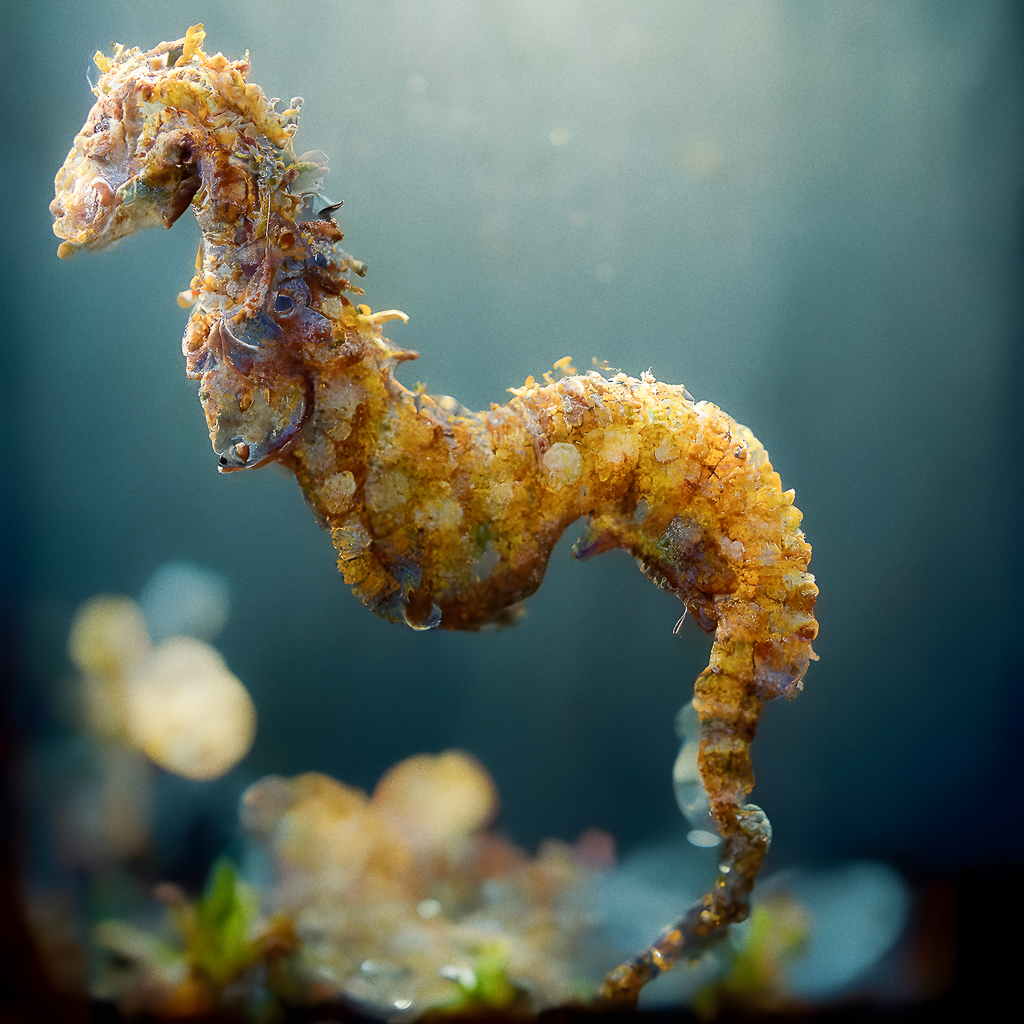
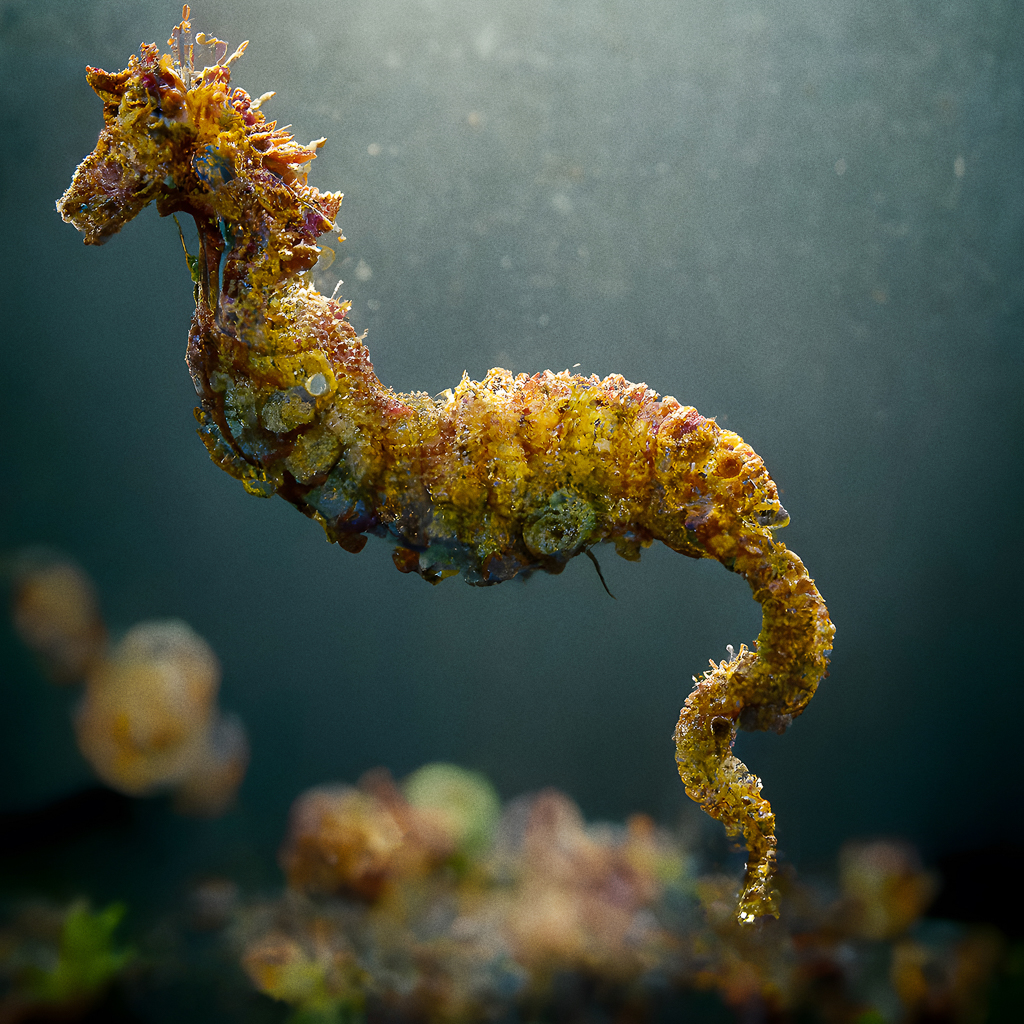
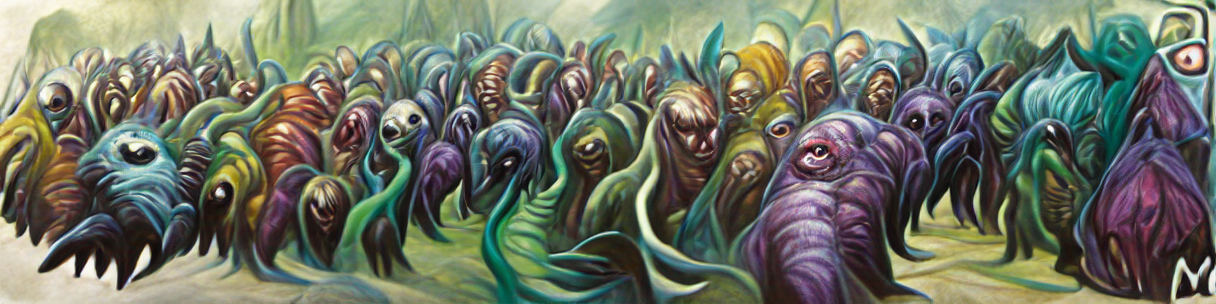
Herenellas are seahorse-like creatures whose bodies form non-euclidean shapes. They feed on ambient temperature differences deep in the ocean. These creatures are very intelligent and will often be found in tight clusters of dozens to hundreds. Herenellas use their long, malleable snouts to communicate with each other, forming a complex language that uses matter-shifting for intonation. While herenellas can also breathe out of water, they rarely have any reason to leave their food source in the ocean depths.

Found in
Release Date April 24, 2022
Sign up for a free account to claim this creature as your own.

♥ 1

♥ 1

Discover other creatures

Explore an endless universe of ficticious life on NovelGens.
UNCOMMON

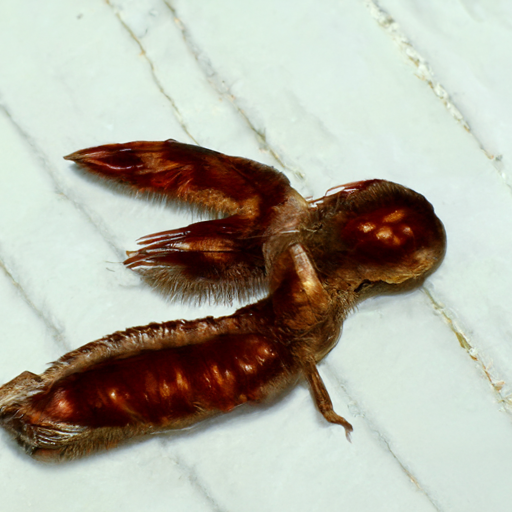
#006 Dune Beetle

Dune beetles are the speedsters of the desert. You wouldn't expect it given their colossal size, but these severely-overgrown bugs can reach speeds of over a hundred miles per hour across flat land. Their flight, however, is much slower and more c...

UNCOMMON

#123 Fenglokam

Fenglokam are stout snake-like creatures with strong limbs, broad feet and a thick tail. They are very hardy animals that can live in virtually any environment or climate and emanate cold from their body rather than heat. Their diet consists mainl...

UNCOMMON

#206 Mooshan

Mooshans are large, furry animals with thick, metallic fur. They live in forests and eat mostly plants, but they also like to hunt mice and other small animals. They are extremely intelligent and can learn to speak a language other than their own....

UNCOMMON

#171 Horsnau

These radioactive snails descend from the common snail but have mutated to grow branching, interconnected shells around long, eel-like bodies. Horsnaus typically live 20-25 years and then die in their shell, which is often too intricate to be reus...

COMMON

#211 Dromlek

Dromleks are intelligent, flightless birds that originate from a far-off galaxy where gravitational directionality frequently changes, and dromleks therefore evolved omni-directional legs to compensate for sudden directional shifts. They are able ...

UNIQUE

#374 Panileaf

A rare incubating leaf. When hatched, it's roots suck up all the nutrients in the soil and destroys the plants around it. These plants hatch a hundred years after they are taken out of their mother plant. The size of the leaves depends on how fa...