UNCOMMON

#187 Southern Bladesnake

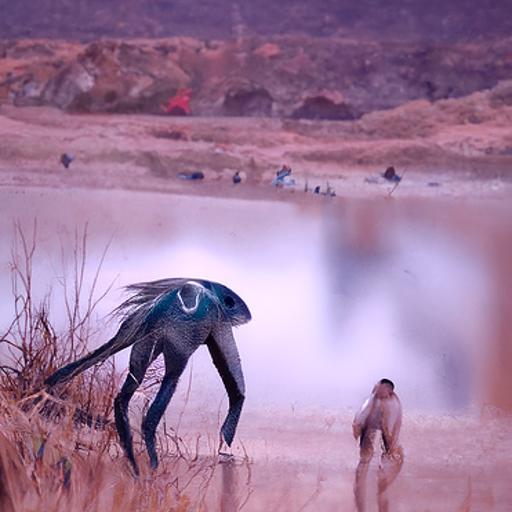
The southern bladesnake is an aggressive snake variant originating in the deserts of Yerht.

Most notable for their regenerative serum, bladesnakes intentionally sever the tails of their young and hold scavenged knives or other metal trinkets against the newborn's wound. Wounded bladesnakes secrete a natural healant that bonds their biostructure with the foreign objects, resulting in snakes that grow up with, for example, a knife for a tail. Despite their name, bladesnakes aren't typically aggressive and often bond with other metal objects, like spoons, pipes, and ancient debris and then learn to use their tails as specialized tools within their community.

Tags
Release Date July 02, 2022
Sign up for a free account to claim this creature as your own.

Discover other creatures

Explore an endless universe of ficticious life on NovelGens.
COMMON

#154 Sizzten muette

The ancient sizzten muette has been a staple of oasis and river life for longer than most other species, acting largely as a peacekeeper among other species over the years. Sizzten muettes can typically be found sipping from water sources and synt...

COMMON

#061 Dirb

Dirbs are flightless birds that wander fields looking for seeds and other small scraps of food. Their legs are incredibly thin and often crack or break with the slightest bump or stumble, but they heal quickly. Dirb meat is bland but filling and t...

UNCOMMON

#137 Gungon

Gungons are medium-sized primates that live in the colder forests of the world. Their white fur is very dense, waterproof, and home to many insect populations. The colorful plants that grow out of their backs serve as camouflage in the spring,...

RARE

#262 Ri-la-doch

Ri-la-doch are a species of sentient amphibious creatures that are somewhat similar to a large frog. Most are around three feet tall and covered in reflective, chromatically-aberrant skin. Like a frog, they are able to jump enormous distances and ...

UNCOMMON

#261 Gorgaur

Gorgaurs are a species of multi-legged reptiles common to beaches and the coasts of shallower seas. They are large and aggressive, living in small groups and hoarding small, precious objects that they find. A gorgaur group will typically carve out...

UNCOMMON

#284 Senjfisk

Senjfisk use thousands of microscopic limbs to move sand around them, enabling them to effectively swim through sand and loose dirt. These nocturnal carnivores also undergo a biological stasis while sleeping, which completely stops all but their m...