UNCOMMON

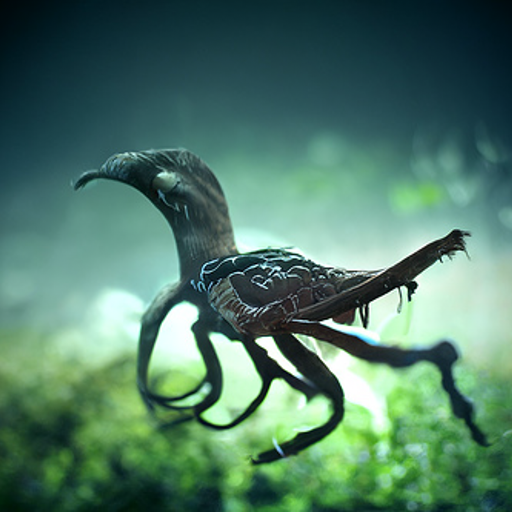
#015 Verdebird

Weirdly, verdebirds glow a bright green color while also only being visible in the direct shadows of light passing through green-tinted glass, making it a rarity to actually observe one outside of controlled conditions. It's said that witnessing one is a terrible omen for things to come, but some groups of people worship them as a harbinger of change and carry shards of green glass with them wherever they go.

Release Date January 11, 2022
Sign up for a free account to claim this creature as your own.

Discover other creatures

Explore an endless universe of ficticious life on NovelGens.

UNCOMMON

#027 Mipurd Ballow

Mipurd Ballows are a small, primitive species of salamander that are found in the deepest cavities of melting ice sheets. They are extremely hardy and can survive in almost any environment, but they are slow-moving and are often considered weak by...

COMMON

#051 Akaru

Akaru are a small, domesticated breed of dragons originally popularized by farmers in the east. Fully grown, most akarun won't even reach your knees. They're bred for vivid colors and make great pets who love to fly around and bring their owner ba...

COMMON

#167 Telusiv

The telusiv is a predatory creature that often lives in the desert, but has been spotted in many other environments. Telusivs have a long, snake-like body and, although they spend most of their life on the ground, they are able to briefly swim thr...

UNCOMMON

#171 Horsnau

These radioactive snails descend from the common snail but have mutated to grow branching, interconnected shells around long, eel-like bodies. Horsnaus typically live 20-25 years and then die in their shell, which is often too intricate to be reus...

COMMON

#173 Alu'fiku

Alu'fiku are reef-dwelling fish most notable for their false "dorsal eye", which remains open while they sleep to help deter smaller predators. This is particularly helpful for alu'fiku because they sleep in open waters, coasting forward as if swi...

UNCOMMON

#284 Senjfisk

Senjfisk use thousands of microscopic limbs to move sand around them, enabling them to effectively swim through sand and loose dirt. These nocturnal carnivores also undergo a biological stasis while sleeping, which completely stops all but their m...