COMMON

#228 Agriot

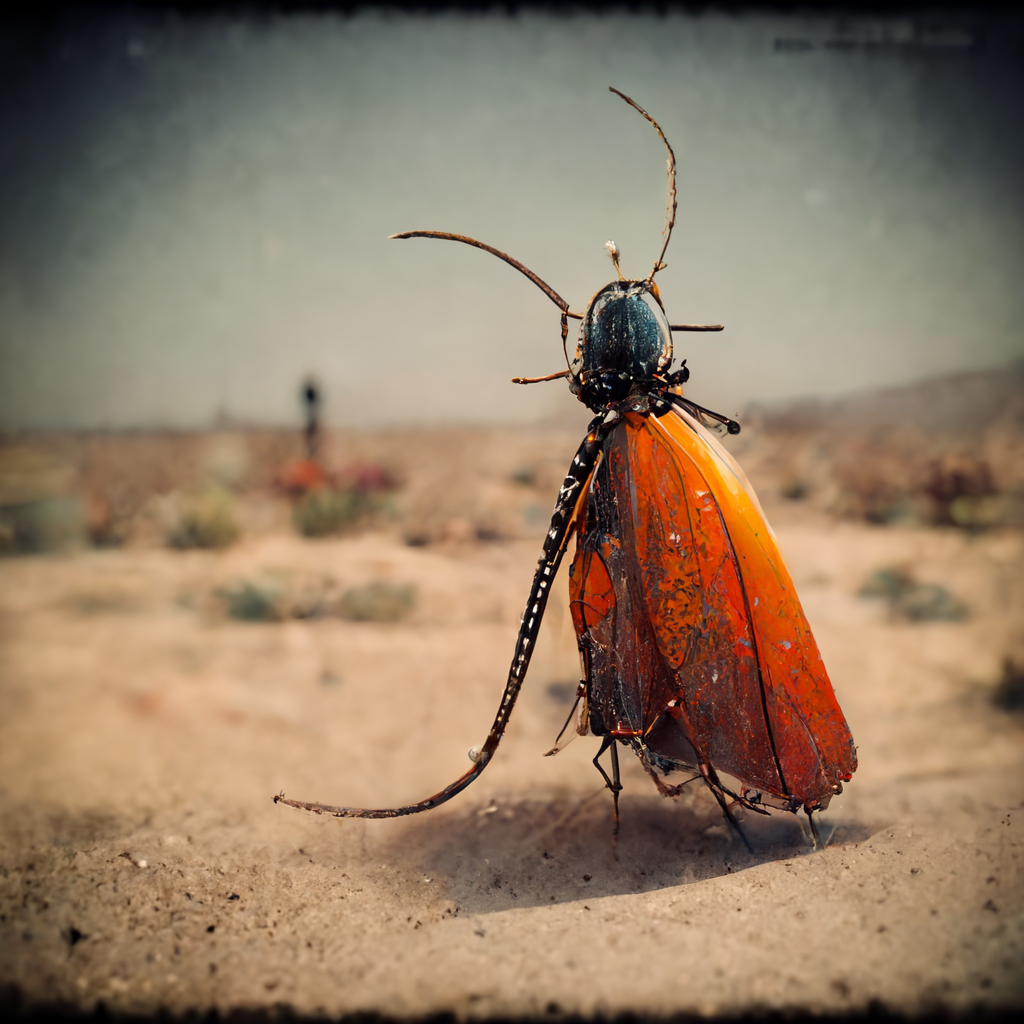
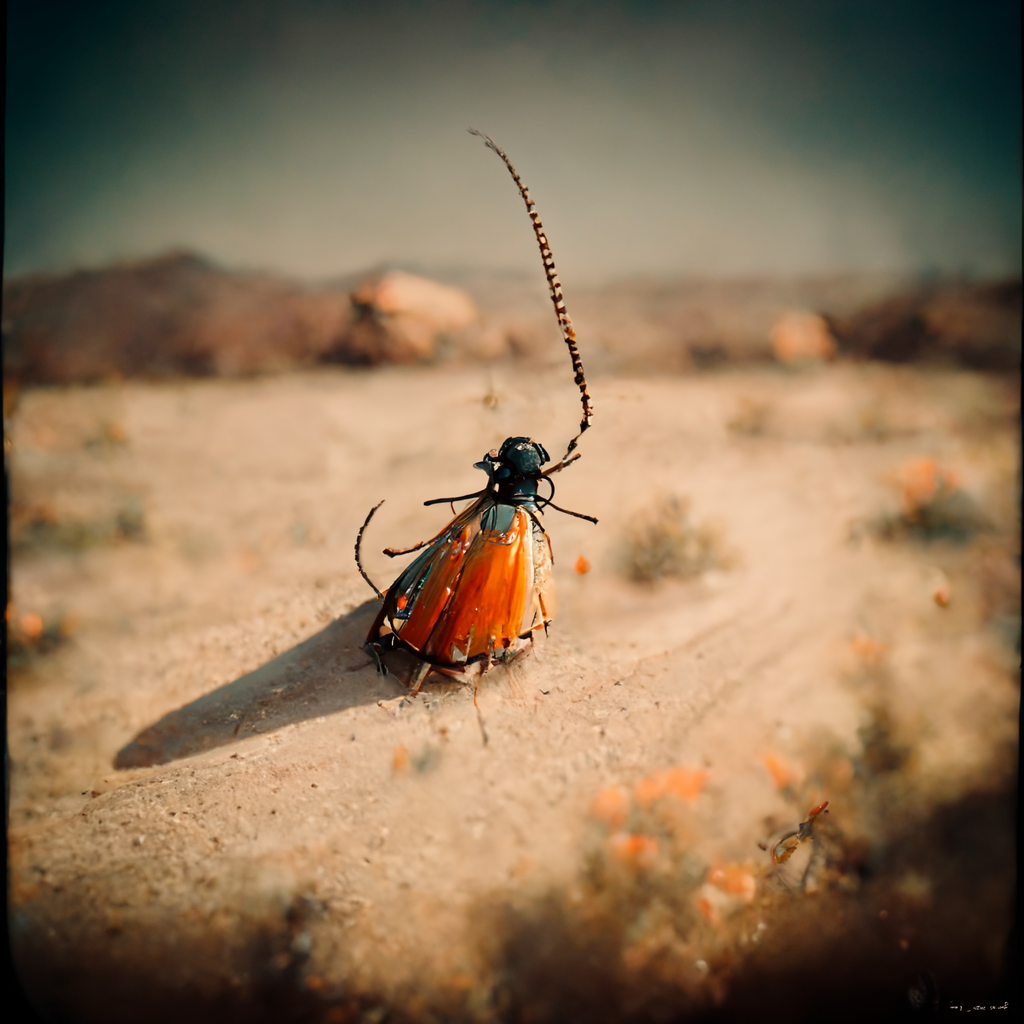
Agriots are long, thin beetles with bright orange wings. They are primarily nocturnal, and spend their days sleeping in the hot desert sands; they will spend the night flying and catching insects in their long, thin pincers. Agriots tend to live by themselves, but will gather together in groups of up to three to eat a larger meal. Sharing a meal in this way seems to create a bond that precludes any aggression between those agriots from that point onward.
Found in
Release Date August 12, 2022
Sign up for a free account to claim this creature as your own.

by NovelGens

Discover other creatures

Explore an endless universe of ficticious life on NovelGens.

COMMON

#038 Gyrom

Gyroms are genetically-engineered giraffe variants that not only have significantly more fat and muscle, but also produce a thin protein film on their skin that absorbs back into the meat to ultimately provide more than double the protein per poun...

UNIQUE

#125 Holivax

The fabled holivax is a race of ancient colorsapping birds believed to now be extinct, but are widely referred to as exceedingly rare in ancient texts. Holivax are said to leech pigment from their surroundings, taking on hypersaturated colors remi...

RARE

#044 Zweifhlaightte

Zweifhlaughttes are colossal slugs from a time long before humans that have an interesting physiological compartmentalization not present in other species on the planet. The majority of the body remains buried underground in self-dug caves, while ...

UNCOMMON

#100 Ignadian

The ignadians are vaguely amorphous cave toads who live in the deepest underground lakes of the world, especially near volcanos. Because they spend much of their time in a liquid state, they have developed the ability to survive at extremely high ...

COMMON

#275 Foyud

Foyud are small insects that look like perched butterflies. However, foyuds are actually more closely related to arachnids that wear "wings" purely for decoration and dissuading predators. Beneath their wings, foyuds walk on dozens of tiny articul...

UNCOMMON

#284 Senjfisk

Senjfisk use thousands of microscopic limbs to move sand around them, enabling them to effectively swim through sand and loose dirt. These nocturnal carnivores also undergo a biological stasis while sleeping, which completely stops all but their m...