COMMON

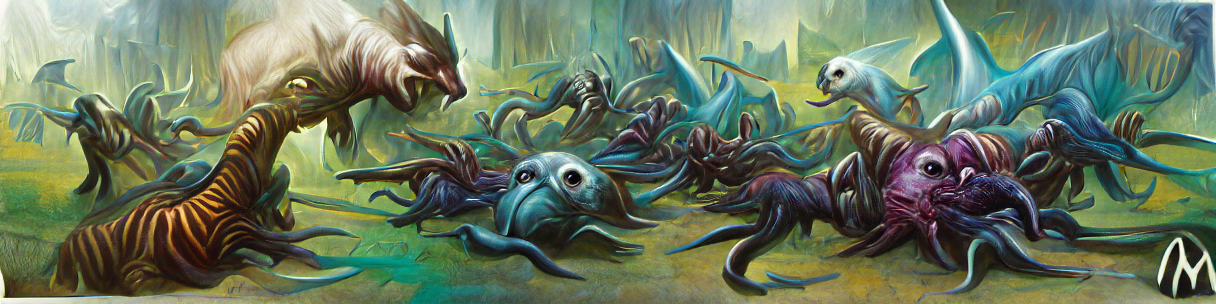
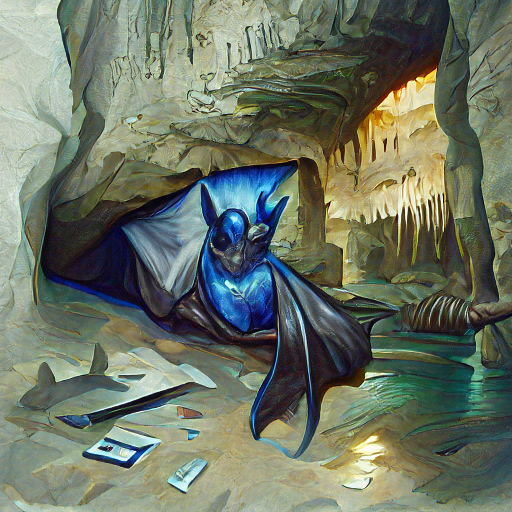
#201 Jigbat

Jigbats are large insects that resemble blue bats. They can be found throughout the world's forests and feed on insects, small birds, and berries. They sting their prey with a powerful paralytic venom that stains the skin blue, which they often use when they are hunting together in groups of several dozen. After taking down prey for food, jigbats will often turn on each other and fight over their share, often stinging other jigbats in the process. Jigbats are immune to their own species' venom, but if a jigbat has been stung, it will become paralyzed for several days and will be unable to eat or defend itself from future attacks. During this time, they will often hide in caves or other natural openings until their strength returns.

Release Date July 16, 2022
Sign up for a free account to claim this creature as your own.

Discover other creatures

Explore an endless universe of ficticious life on NovelGens.
UNCOMMON

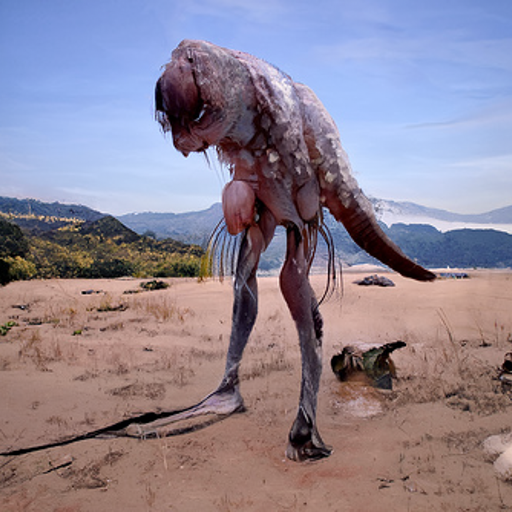
#007 Merm

Merms live in small groups, typically in the deepest reaches of the western oceans. They seem closely related to a potential aquatic fork of human evolution, but scientists haven't yet developed a way to communicate with them.

UNCOMMON

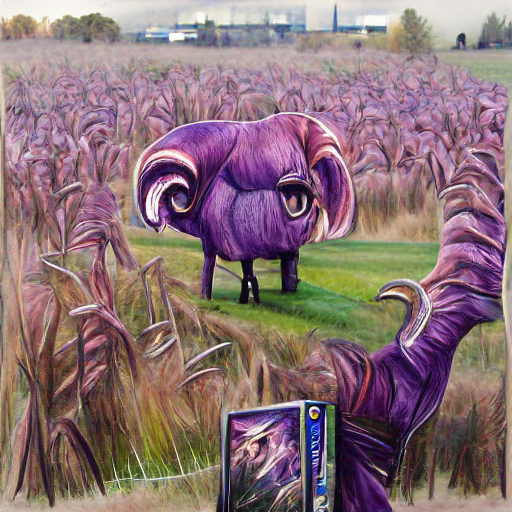
#206 Mooshan

Mooshans are large, furry animals with thick, metallic fur. They live in forests and eat mostly plants, but they also like to hunt mice and other small animals. They are extremely intelligent and can learn to speak a language other than their own....

COMMON

#269 Oceanstar

The oceanstar is a common salt-water marine mollusk. Oceanstars got their name from sailors who could just barely make out twinkling lights beneath the ocean waves in the pitch of night. Oceanstars are herbivores that feed on microplants and detri...

UNCOMMON

#236 Squeebl

Squeebls were first domesticated at the turn of the last century to be an aquatic pet used to symbolize world adventuring among the upper class, but have since become a popular staple in all kinds of households due to their simple care instruction...

RARE

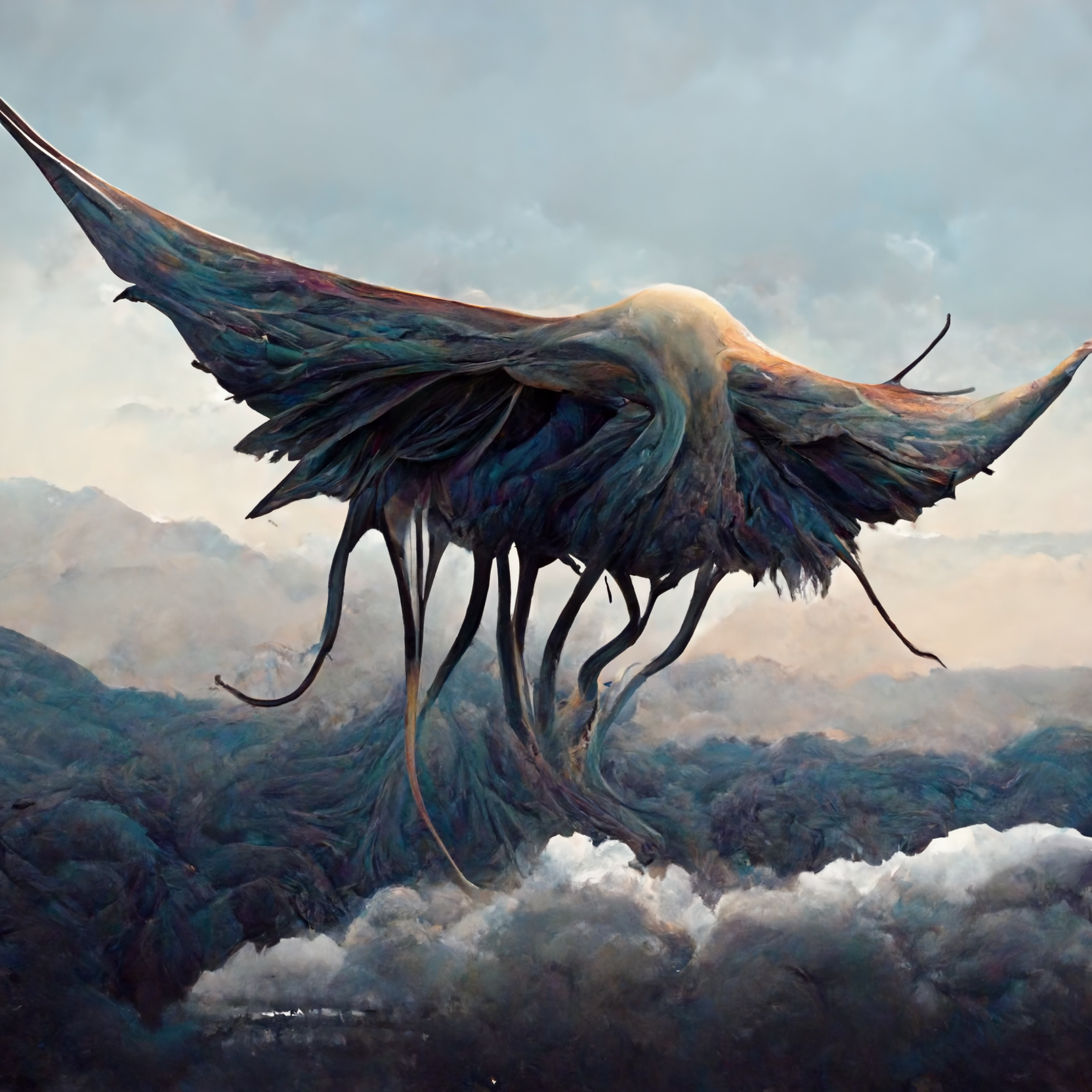
#286 Zuggar

Zuggars are enormous, tentacled abominations from an unknown origin. Zuggars survive by scooping up giant mountains and slowly digesting the rock formations. After a zuggar finishes eating, it floats to the next mountain and begins the process aga...

RARE

#347 Spectrowl

This large avian is colloquially known as the "master of camouflage" because of the hard, spectral shards that cover its body. These scales contain thousands of prisms that capture ambient light and reflect a perfect representation of an uninterru...