RARE

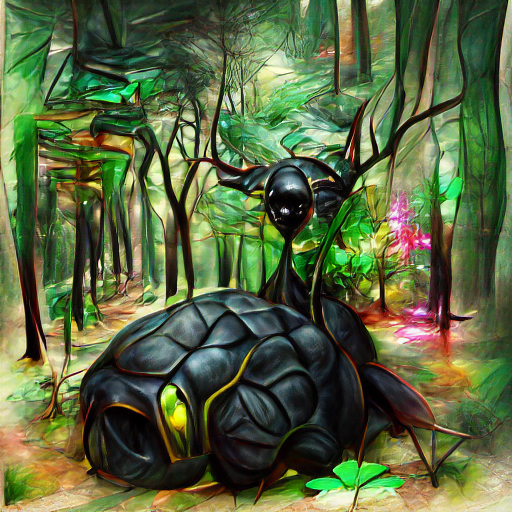
#267 Groxus

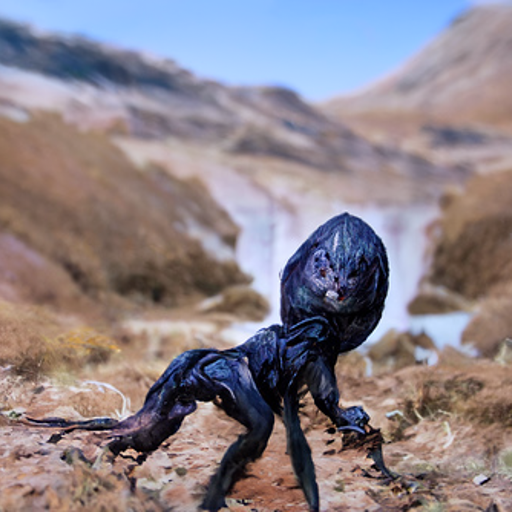
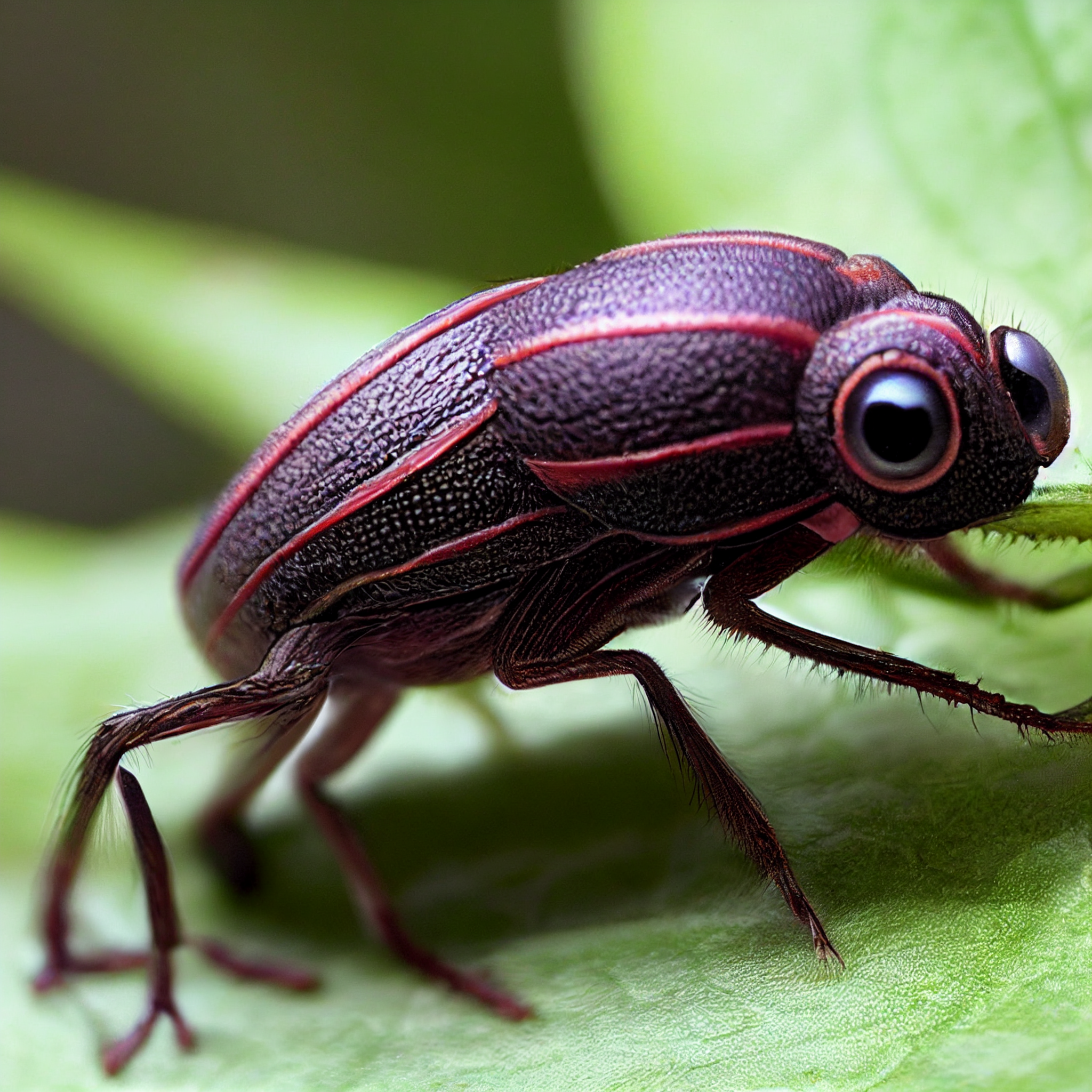
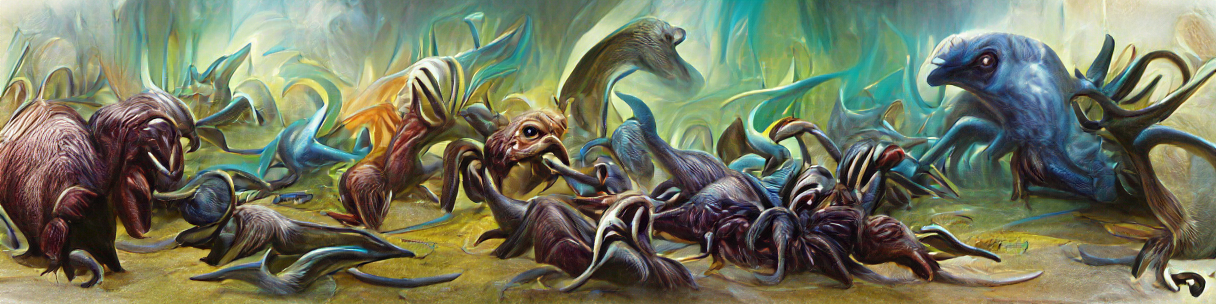
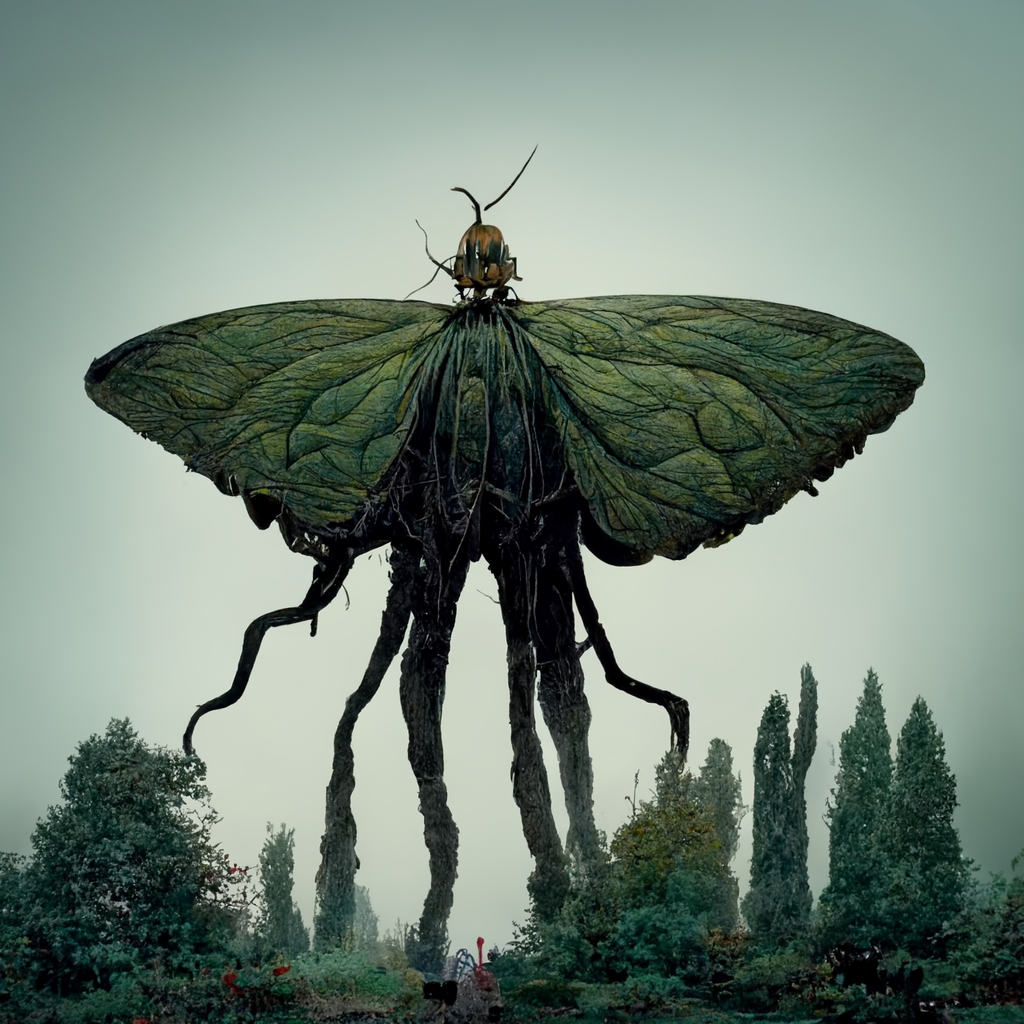
The groxus is the largest known insect in the world. They can grow to be 300 feet long and weigh up to 60 tons. Groxuses are nocturnal, feeding on large mammals and each other. They can be found in forests and deserts throughout the world. Because of their large size, groxi spend a lot of time hunting and will swoop down from the sky to consume entire fields worth of livestock before migrating on to new areas.

Release Date September 20, 2022
Sign up for a free account to claim this creature as your own.

Discover other creatures

Explore an endless universe of ficticious life on NovelGens.
RARE

#097 Whalewalker

These hulking creatures once dominated the long-lost oceans. As the heat wave intensified and oceans began to evaporate, the first whalewalker ancestors adapted their way onto land. Whalewalkers lay down and open their gigantic mouth, then remain ...

RARE

#030 Urryn-ast

Urryn-ast are always on the hunt for humans on the verge of death and will track their prey for days at a time. They consume deceased bodies whole and, in doing so, memorize a sequence of the consumed DNA as a part of their complex digestive proce...

UNCOMMON

#217 Jauxckle

The jauxckle is a small mammal that typically calls colder forests its home, but will often wander into new areas in its post-life undead state. Although jauxckles exclusively feed on berries and other vegetation during their life, they also inclu...

UNCOMMON

#238 Kinkingo

Kinkingo are small, aquatic rodents best known for their unique camoflage routine. These small creatures gradually fade to a dark grey color while sleeping, helping them blend in with barnacles and coral they typically nest in. When a kinkingo awa...

COMMON

#250 Parloi

Parlois are large, herbivorous reptiles without a face that spend most of their time in the water. They are easygoing, almost to a fault. They will often ignore predators and let them eat them if it means that they can continue to relax. Their fav...

UNIQUE

#374 Panileaf

A rare incubating leaf. When hatched, it's roots suck up all the nutrients in the soil and destroys the plants around it. These plants hatch a hundred years after they are taken out of their mother plant. The size of the leaves depends on how fa...